
Last updated November 2, 2026
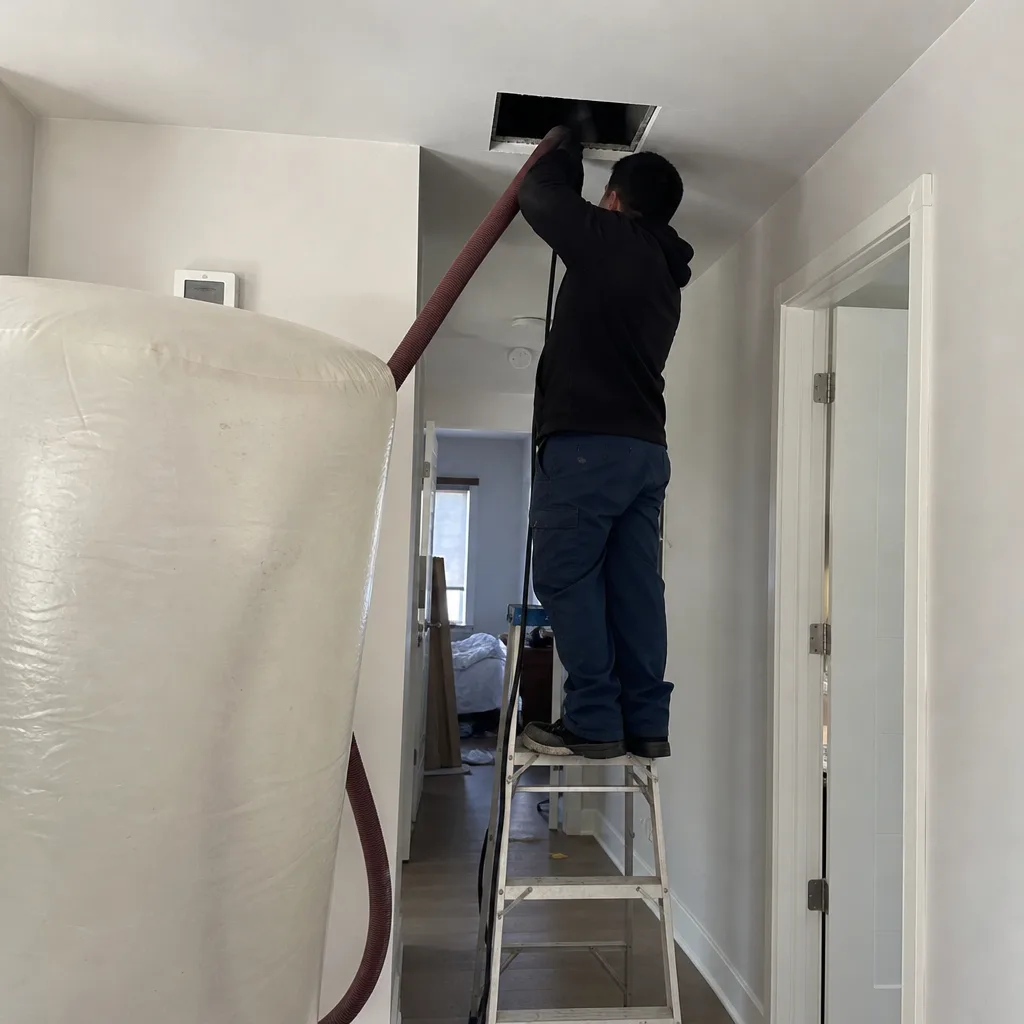
 Whole-home duct cleaning
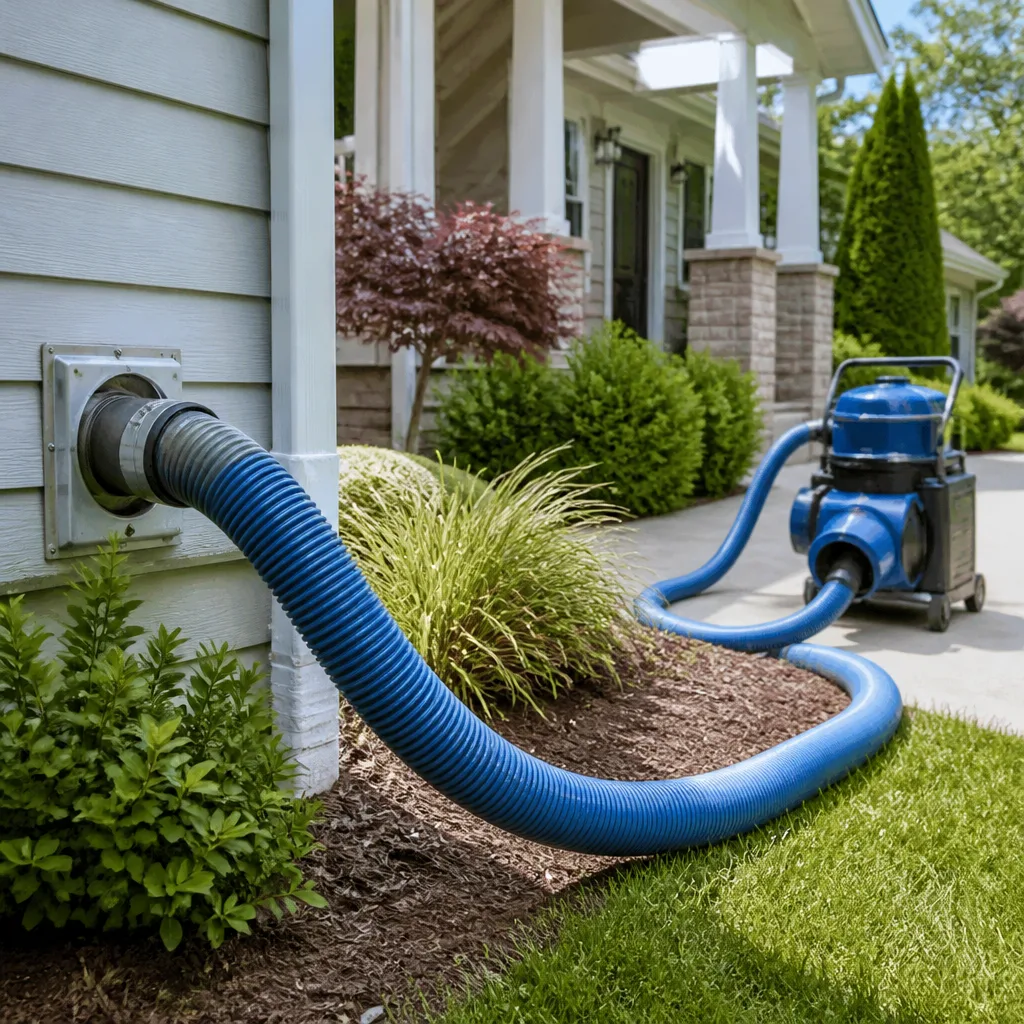
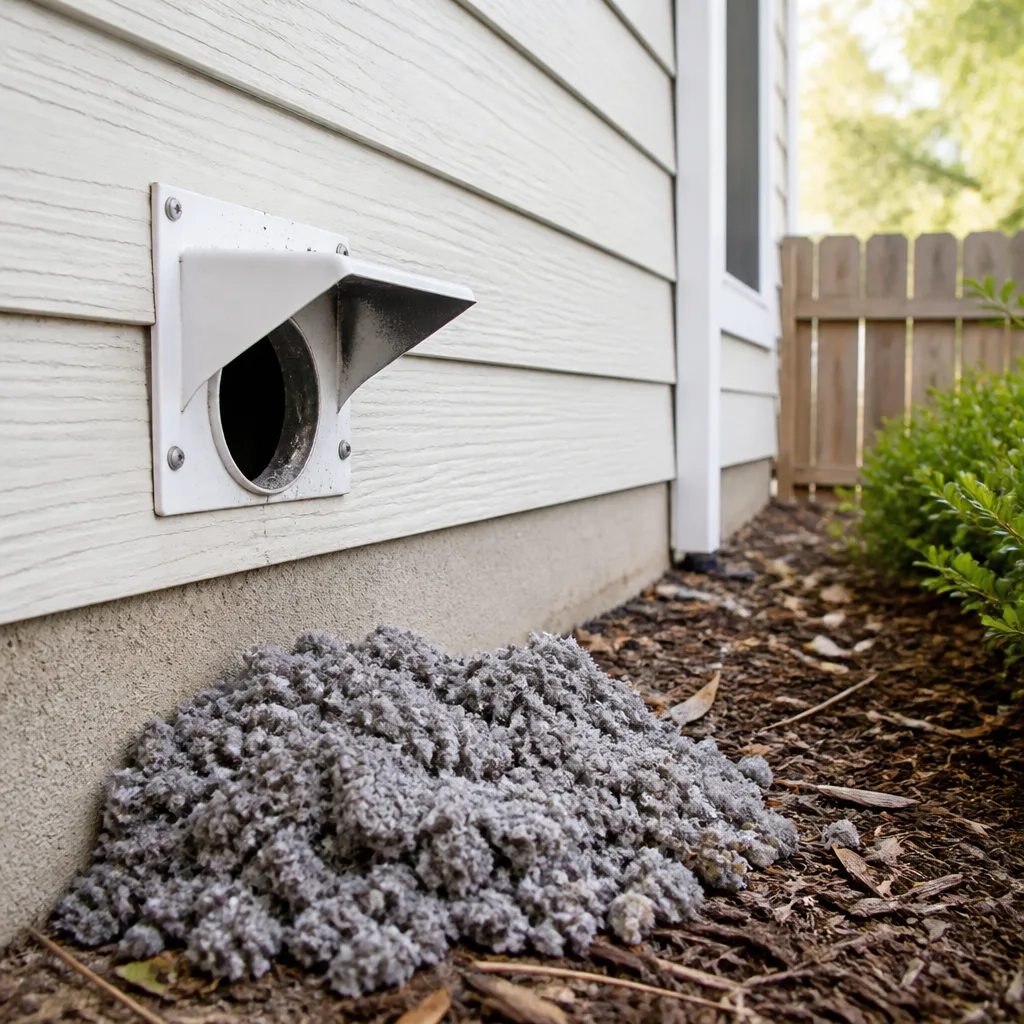 Dryer vent cleaning
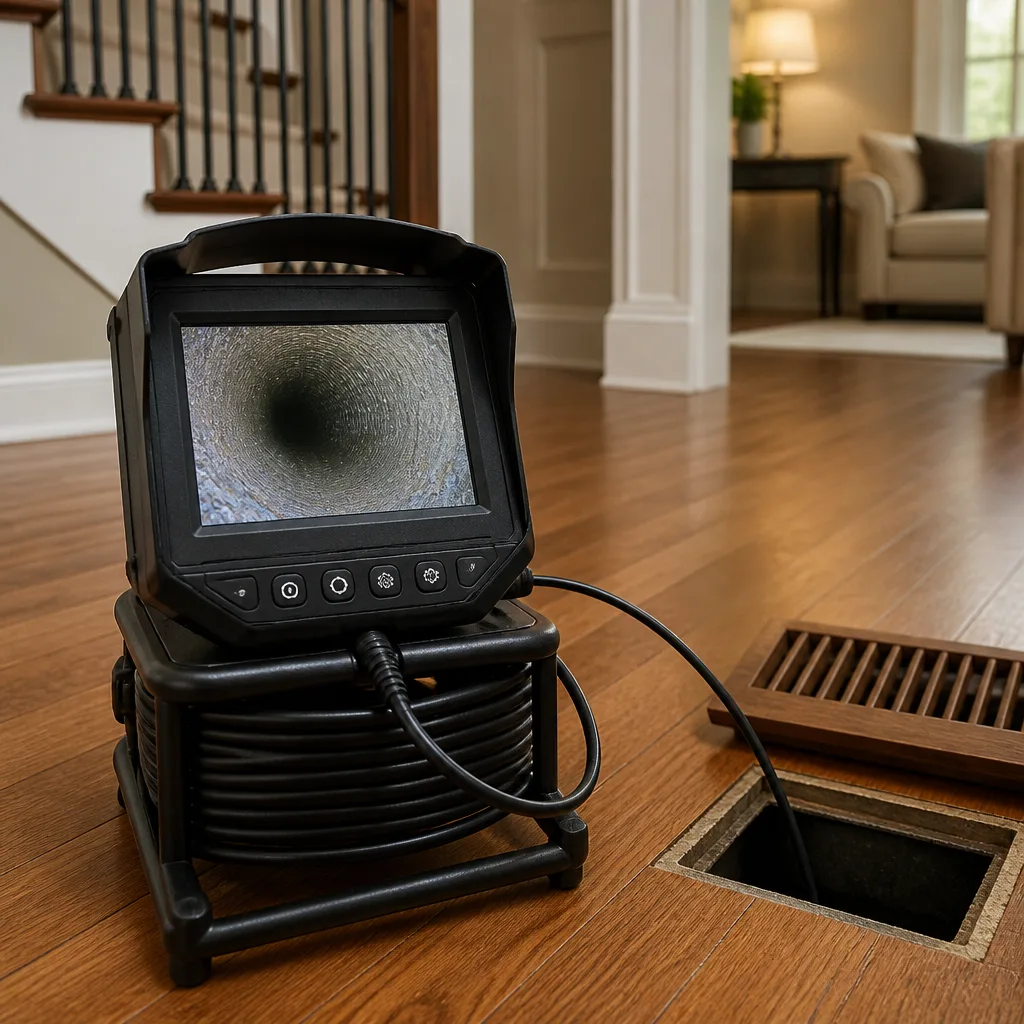 Camera inspection
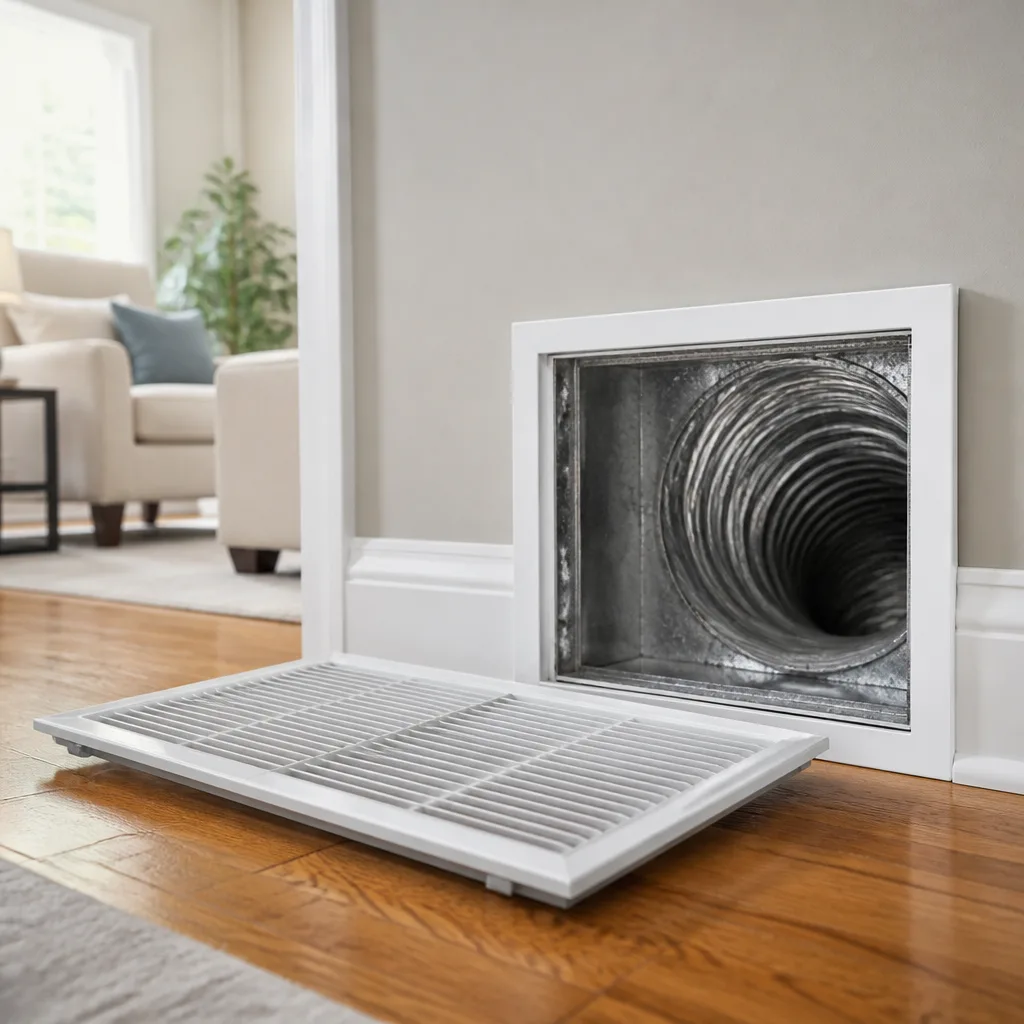 Sanitizing & deodorizing
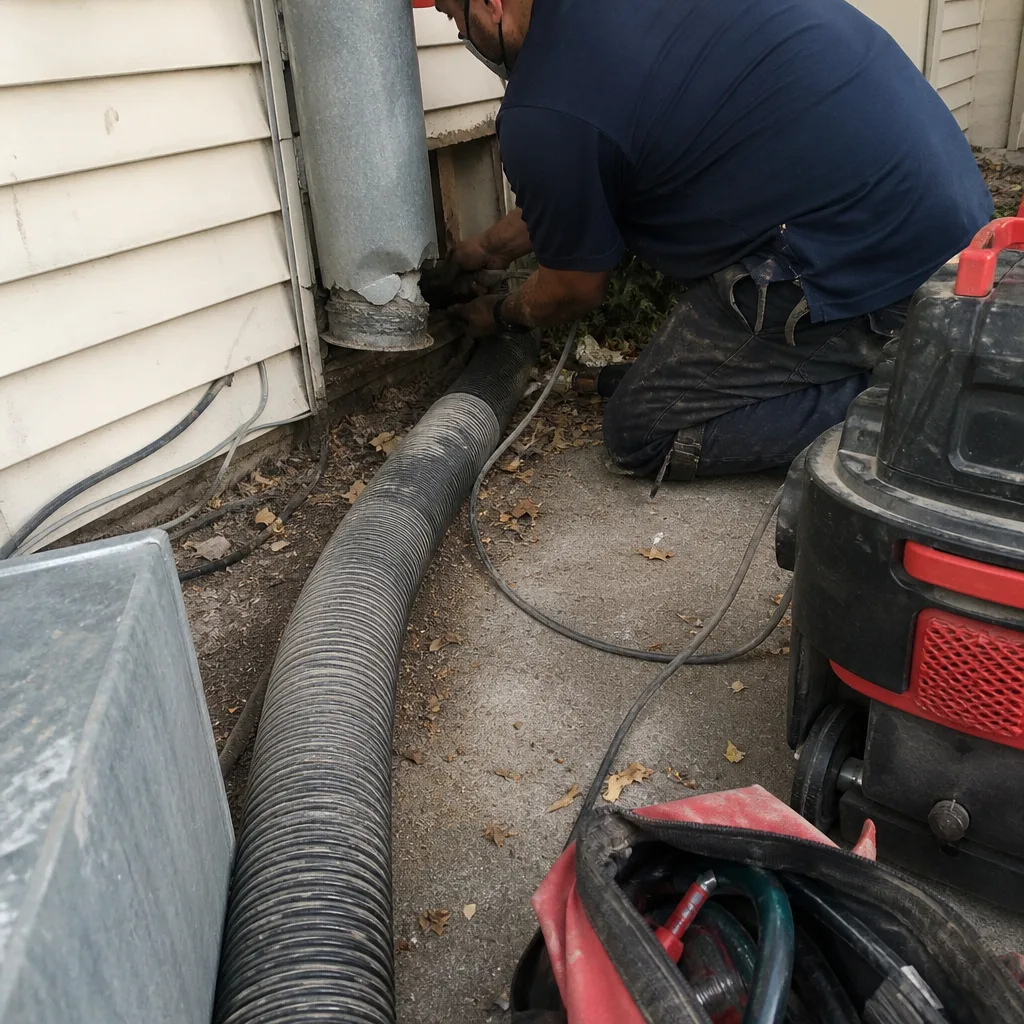
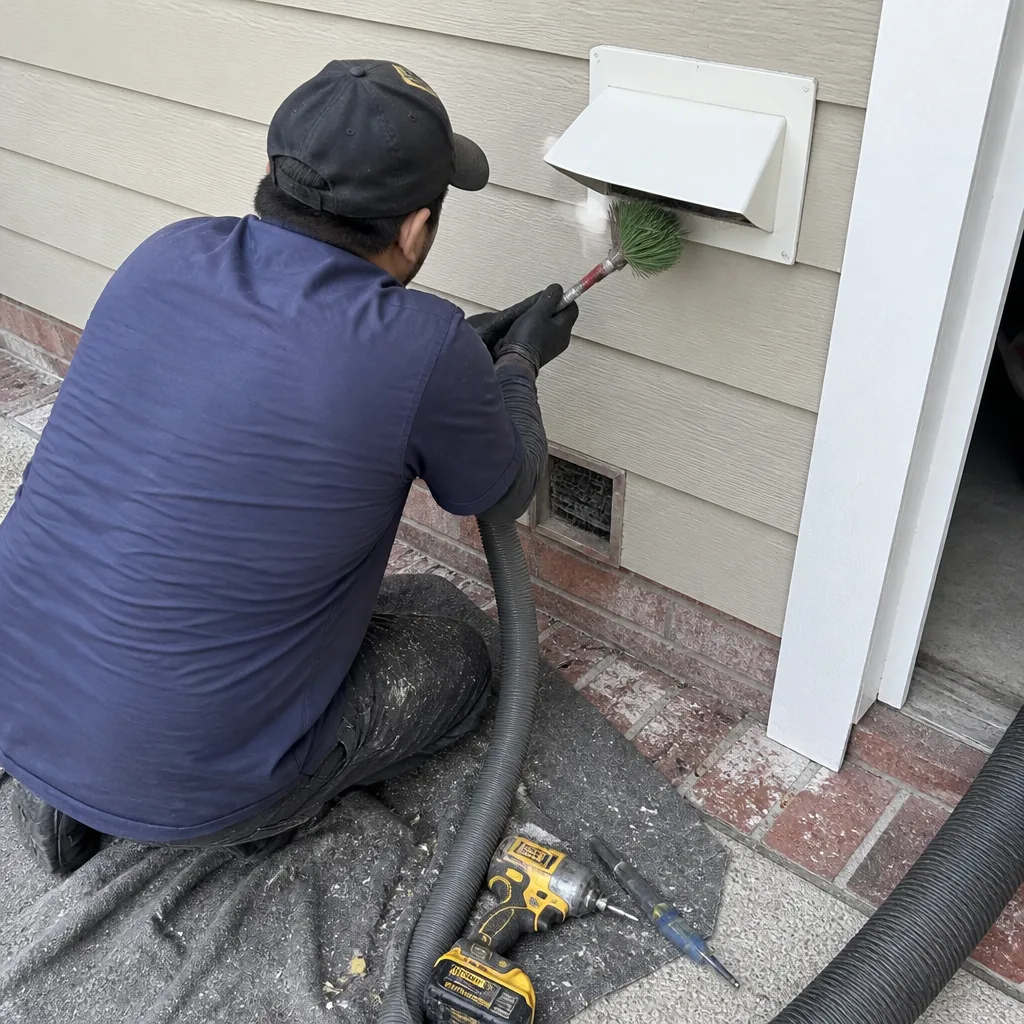
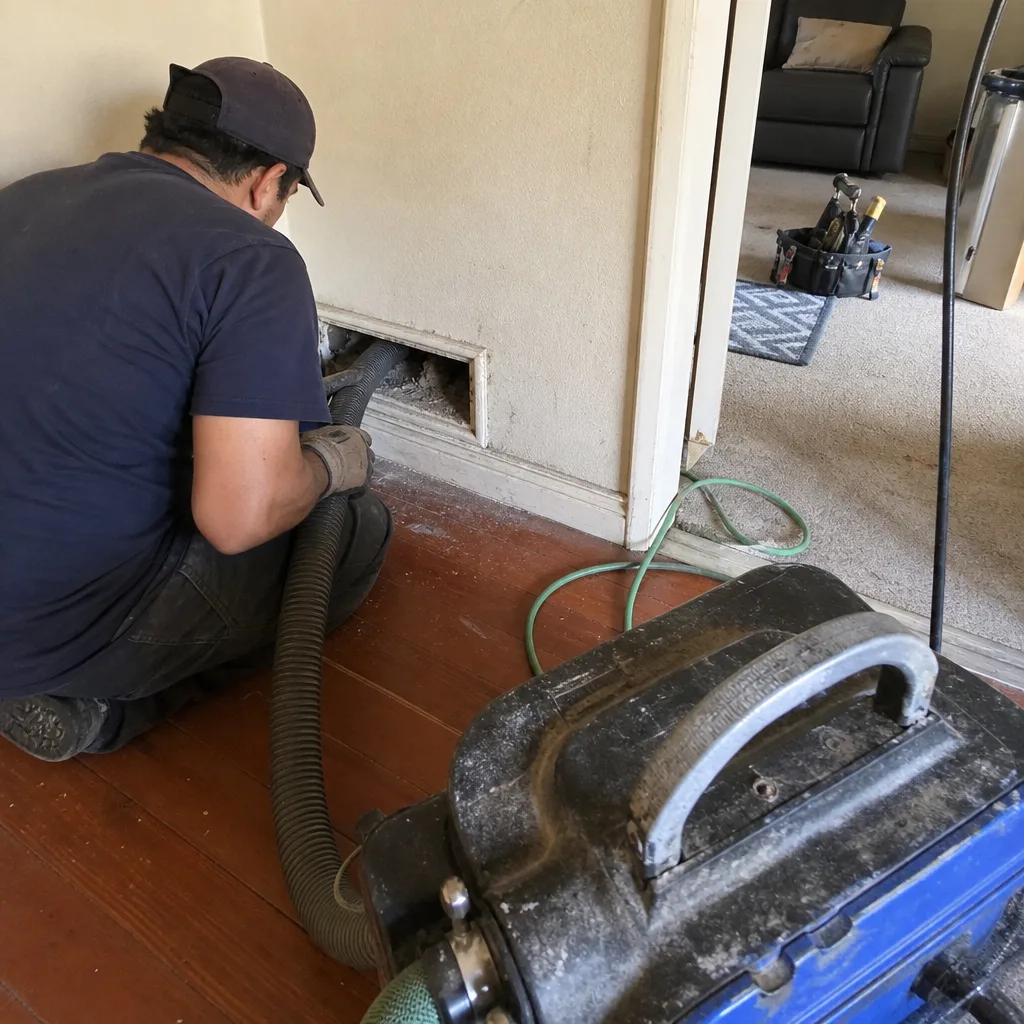
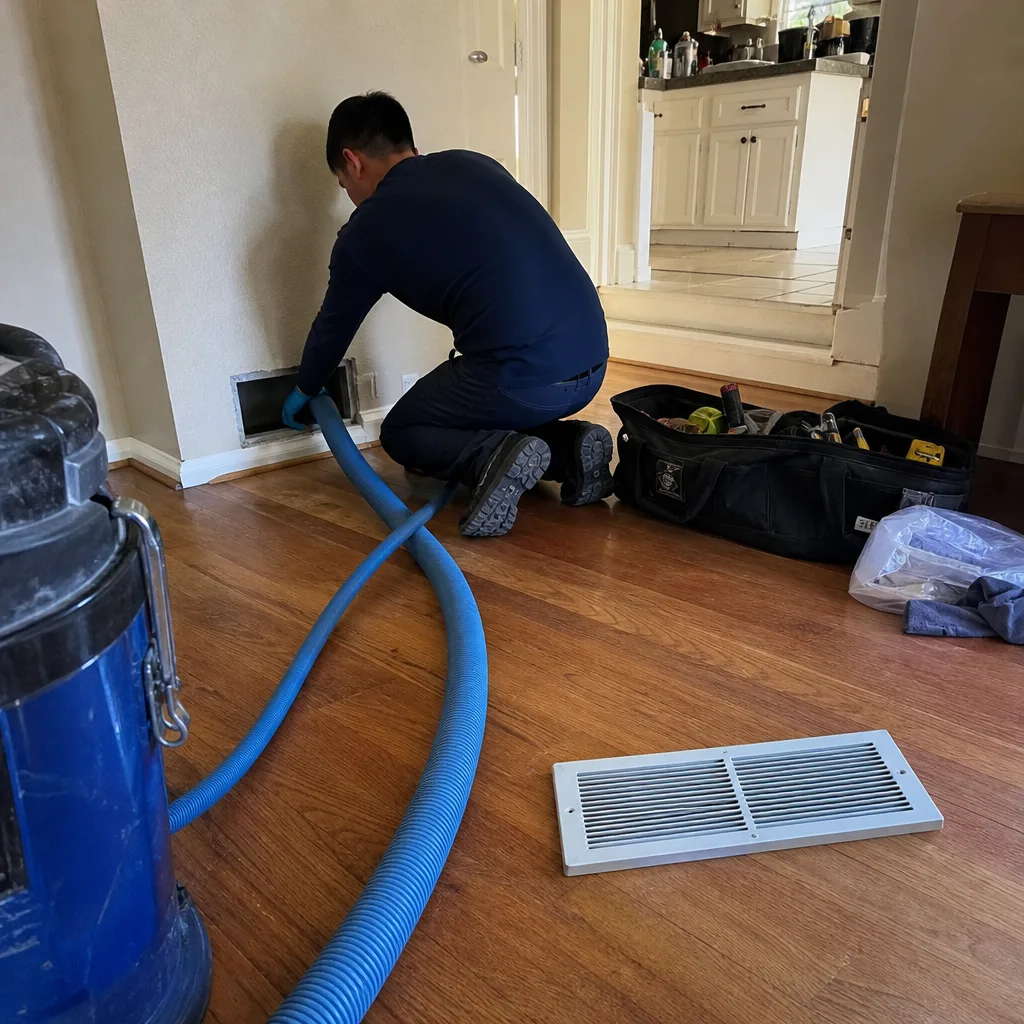
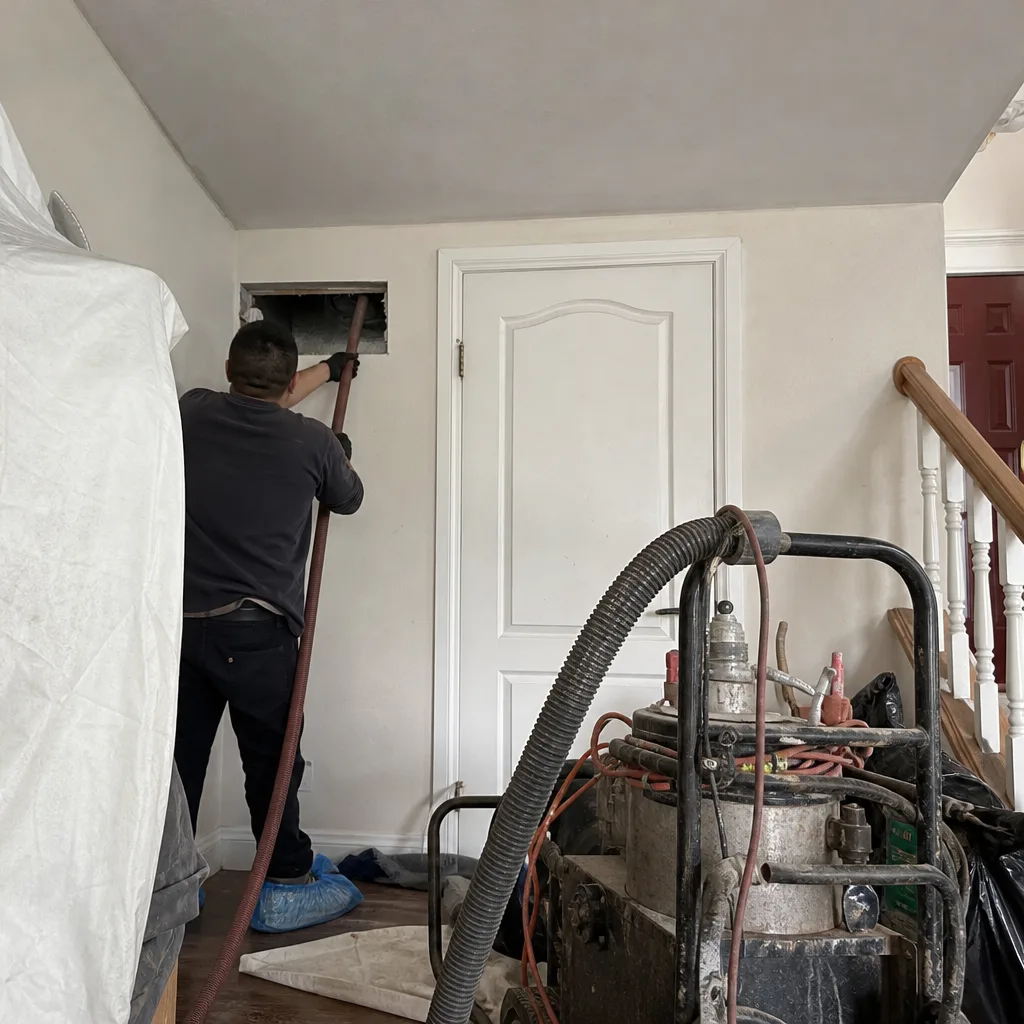
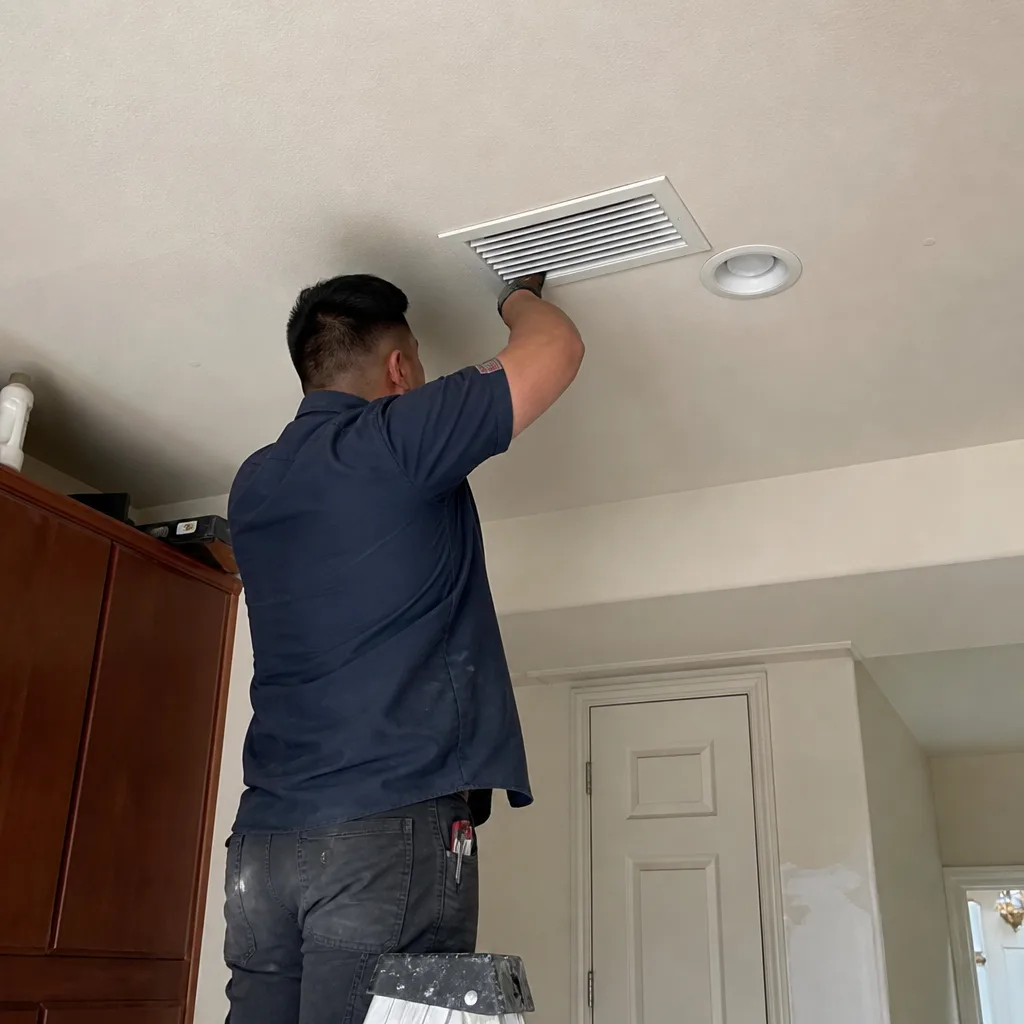
Whole-system duct and dryer vent check with before-and-after photos - you see exactly what came out of your vents
That "$99 whole-house special" is a bait ad - the real number appears once they are in your hallway, or the "clean" is a shop-vac at the register. We photograph the inside of your ducts before and after instead.
Air Duct Cleaning Maintenance Checklist for Sunnyvale Homeowners
The single most skipped maintenance step in Sunnyvale homes isn’t changing the filter or cleaning the return grille. It’s inspecting the duct boot connections at each floor register. Those metal collars where ducts meet the floor or wall work loose over time, especially in older Sunnyvale homes with raised foundations that shift through wet winters and dry summers. A loose boot lets crawlspace air, dust, and rodent debris bypass the filter entirely and recontaminate ducts within weeks of a professional cleaning. The inspection takes under ten minutes and requires zero tools. This guide gives Sunnyvale homeowners a maintenance calendar calibrated to what actually degrades duct performance here: oak pollen, Diablo wind dust, wildfire smoke, and the micro-tears in flex duct that plague homes built before 1990.
Quick Answer
Air duct maintenance in Sunnyvale means more than swapping a filter every 90 days. Homeowners should inspect register boot connections twice a year, check visible flex duct in crawlspaces and attics for tears each spring, upgrade to MERV 11-13 filters during wildfire season if the HVAC system can handle the pressure drop, and schedule Air Duct Cleaning every 3 to 5 years, or sooner if the home sits near El Camino Real traffic corridors or has pets that shed heavily.
Styles & brands we work with
- Whole-home duct cleaning
- Dryer vent cleaning
- Camera inspection
- Sanitizing & deodorizing
Table of Contents
- Monthly Checkpoints That Take Under 15 Minutes
- Seasonal Maintenance Calendar for Sunnyvale’s Climate
- How to Inspect Flex Duct in Crawlspaces and Attics
- MERV Rating Selection for Sunnyvale Homes
- Maintaining UV Purifiers and Whole-House Filtration Systems
- Documenting Baseline Conditions with Your Smartphone
- Common Mistakes to Avoid
- When to Call a Professional
Monthly Checkpoints That Take Under 15 Minutes
These five tasks form the backbone of duct maintenance in Sunnyvale. None requires special tools, and together they prevent most of the recontamination we see on service calls throughout Santa Clara County. Do them the first weekend of each month and the routine becomes automatic.
- Register boot check. Remove each floor or wall register and feel around the metal collar where the duct connects to the register box. A proper connection sits flush with no gaps. If you can slip a fingertip between the boot and the flooring or drywall, conditioned air is escaping into the wall cavity or crawlspace, and unfiltered air is being pulled back in when the system cycles off. Seal the gap with aluminum tape, not duct tape, which dries out and fails within a year in Sunnyvale attics that hit 130 degrees in summer.
- Return grille vacuuming. The return air grille is the intake point for your HVAC system. In homes near Central Expressway or El Camino Real, these grilles accumulate brake dust and road particulate faster than homeowners expect. Pop the grille off, vacuum the surface and the first few inches of the return plenum with a brush attachment, and wipe the grille with a damp microfiber cloth.
- Filter visual check. Hold the filter up to a light source. If you can’t see light through it, air isn’t moving through it properly either. A loaded filter forces the blower to work harder, which increases energy consumption and shortens equipment life. In Sunnyvale’s mild climate, standard 1-inch filters typically last 60 to 90 days, but homes with pets or windows left open during spring often need replacement at 30 to 45 days.
- Supply register dust pattern watch. Dark gray or black streaking on the wall or ceiling around a supply register indicates air bypassing the register seal and depositing fine particulate. This isn’t just cosmetic. It means the register isn’t seated properly in the boot, and conditioned air is leaking into the wall cavity.
- Odd odor sweep. Run the fan in “ON” mode for five minutes and walk through each room while smelling the air at registers. Musty or sour smells indicate moisture in the ducts, which in Sunnyvale usually means a crawlspace humidity issue or a condensation problem in the attic. A burning smell when the heat first runs in November is often just dust burning off the heat exchanger, but persistent odor warrants a call.
We’d also suggest a quick visual check of your dryer’s exterior vent flap during one of these monthly sessions. Lint buildup at the flap or a flap that doesn’t close means the vent run is partially blocked. That’s a fire-safety issue, and our guide on Dryer Vent Cleaning in Sunnyvale explains what to look for and when to act.
Seasonal Maintenance Calendar for Sunnyvale’s Climate
Sunnyvale’s climate is mild enough that HVAC systems cycle less than in most of the country, but the Bay Area’s particulate patterns create distinct maintenance seasons that generic checklists miss entirely. Here’s the month-by-month breakdown.
March through May: Oak Pollen Peak
Sunnyvale’s live oaks release pollen from early March into late May. That yellow-green dust you see on cars is also entering your HVAC system through open windows, door gaps, and any crack in the return plenum. During this window, check filters twice a month rather than monthly. If your system has a MERV 8 filter, consider stepping up to MERV 11 for eight weeks, but only if your HVAC system can handle the increased pressure drop. More on that in the filter section below.
Homeowners in the Heritage District and other mature neighborhoods with large oak canopies should also check outdoor condenser units weekly during this period. Pollen is notorious for coating condenser coils and reducing efficiency by 10 to 15 percent when buildup is heavy.
June through August: Cooling Season and Crawlspace Humidity
Inland Sunnyvale neighborhoods like Birdland and Ortega Park run air conditioning steadily through summer. The temperature differential between cooled ducts and warm crawlspace air creates condensation on duct exteriors in raised-foundation homes, especially where ducts run through the crawlspace rather than the attic. This condensation attracts dust that hardens into a crust on the duct exterior and supports mold growth if humidity stays elevated. Check crawlspace vents are unobstructed during this window, and look for water staining on duct insulation.
September through October: Diablo Wind Dust Events
Diablo winds typically arrive in September and October, pushing dry air from the interior valleys down through the Bay Area. These events carry fine dust that penetrates window screens, door weatherstripping, and even closed windows in the oldest Sunnyvale homes. After a wind event, check the filter regardless of how recently it was changed. Homes bordering open space or construction zones along Lawrence Expressway or Mathilda Avenue see the worst of it.
July through October: Wildfire Smoke Advisories
Wildfire smoke from fires in the Santa Cruz Mountains, East Bay hills, or farther north is now a regular summer and fall occurrence in Sunnyvale. When air quality indices climb above 150, your HVAC system becomes your primary indoor air filtration device, provided you’ve installed a filter rated for the job. Run the fan continuously during smoke advisories and change the filter immediately after the advisory clears, even if it’s only been in service for two weeks. Smoke particulates load filters quickly, and a spent filter recirculates what it’s captured.
For a deeper look at how professional cleaning addresses the buildup these seasonal events leave behind, see our guide on Air Duct Cleaning in Sunnyvale.
How to Inspect Flex Duct in Crawlspaces and Attics
Flex duct is the flexible, insulated tubing used in most Sunnyvale homes built since the 1970s. It’s efficient and easy to install, which is why it’s everywhere in residential construction, but it has a weakness: the outer vapor barrier is thin foil or plastic that tears easily. A single micro-tear in crawlspace duct pulls unfiltered air directly into the system, negating any filter upgrades and professional cleanings.
What You’re Looking For
- Silver foil tears. The outer jacket is typically silver Mylar. Any cut, abrasion, or split in this layer means the fiberglass insulation beneath is exposed and pulling moisture. In crawlspaces, rats and mice chew through this material regularly, especially in older Sunnyvale neighborhoods with mature landscaping and easy crawlspace access.
- Sagging runs. Flex duct should be supported every four to five feet with straps. Runs that sag between supports create low points where condensation collects, leading to mold growth inside the duct and rust on supporting hardware.
- Belly kinks. Sharp bends crimp the internal wire coil and restrict airflow. Rooms that never heat or cool properly, despite a working system, often trace back to a kinked flex run in the attic.
- Disconnected boots. The connection at the metal register boot can separate entirely. If a room feels stuffy or registers barely move air, the duct may be completely off the boot. You’d be surprised how often this happens in crawlspaces and goes unnoticed for months.
- Gray surface staining. Dark or fuzzy patches on the outer jacket indicate organic growth, usually from condensation. This needs professional assessment, not just a visual check.
Inspection Gear and Method
You need a good headlamp or flashlight, a dust mask, and knee pads for crawlspace work. If your crawlspace has been treated chemically for pests or you’re unsure about it, use a respirator, not just a dust mask. Move methodically from one end to the other, photographing any suspicious areas with your phone. Do not crawl into a space you’re not confident entering, and never enter a crawlspace with standing water or visible electrical hazards. This is a visual inspection, not repairs. If you find damage, consult Air Duct Repair in Sunnyvale specialists who handle torn jackets, sagging runs, and disconnected boots with proper materials and equipment.
Homes built before 1990 in Sunnyvale, particularly in neighborhoods like Cherry Chase and Serra, often have flex duct that’s past its expected service life of 20 to 25 years. If you see multiple tears, brittle outer jackets, or insulation that crumbles on contact, the run needs replacement rather than patching. We’ve seen duct insulation so degraded it turns to powder when touched. At that point, cleaning is pointless until the material issue is addressed.
MERV Rating Selection for Sunnyvale Homes
Not every Sunnyvale home should run the same filter. The right MERV rating depends on specific household conditions, and choosing wrong in either direction creates real problems. A rating too low fails to capture the particulates that matter here. A rating too high chokes airflow on older systems, which increases energy costs and shortens blower motor life.
Here’s the practical breakdown we use when advising Sunnyvale homeowners:
- MERV 8, standard baseline. This is the typical fiberglass or pleated filter found in most homes. It captures dust, pollen, and large particles. Adequate for homes with no pets, no allergy sufferers, and no proximity to major traffic corridors. If you live in a low-traffic neighborhood like Cumberland South and don’t have pets, MERV 8 works fine and keeps the system breathing easily.
- MERV 11, pet household upgrade. Dog and cat dander is smaller than standard dust and slips through MERV 8 pleats. Homes with indoor pets should run MERV 11 year-round. The pressure drop is moderate, and most modern HVAC systems handle it fine. This rating also captures more of the fine particulate from cooking, which matters in homes with open kitchens near living spaces.
- MERV 13, wildfire smoke and respiratory conditions. If anyone in the home has asthma, COPD, or documented allergies, or if you live near El Camino Real, Central Expressway, or Highway 85 with constant traffic particulate, MERV 13 is the strong choice. It’s the minimum rating recommended during wildfire smoke events by the EPA and the California Air Resources Board. However, the pressure drop is significant. Systems with undersized returns or older blowers may not handle MERV 13 without airflow reduction. The filter also needs to be one to two inches thick at minimum to avoid loading too fast. Thin 1-inch MERV 13 filters load up within weeks, which defeats the purpose.
If you’re running a whole-house filtration system from Aprilaire or Honeywell, consult the manufacturer’s specs before switching filter ratings. These systems are engineered around specific media thicknesses and airflow assumptions, and changing the filter type without checking the installation manual can damage the unit. Our team works with Duct Cleaning Sunnyvale home systems of all configurations and can confirm what your HVAC setup will tolerate before you invest in a full season of high-MERV filters.
Maintaining UV Purifiers and Whole-House Filtration Systems
Homes in Sunnyvale increasingly run UV air purifiers and whole-house filtration systems, especially after the smoke seasons of recent years. These systems change the maintenance calculus. When they’re working properly, they extend the interval between professional duct cleanings. When they’re neglected, they become a false sense of security and in some cases a biological growth surface themselves.
UV Air Purifier Checkpoints
UV lamps lose output over time, and most need replacement annually, even if they still glow. A glowing bulb doesn’t mean it’s producing germicidal wavelengths at the intensity the system requires. Check the bulb’s rated service hours, typically 9,000 to 12,000, and note the installation date. Write it on the ballast with a permanent marker. Dust on the bulb surface blocks UV output, so wipe the bulb quarterly with a soft dry cloth, following the manufacturer’s shutdown procedure first. If the bulb has been in service over 12 months, schedule replacement before wildfire season, not during it.
Whole-House Filtration System Checkpoints
Aprilaire and Honeywell media cabinets typically take 4-inch or 5-inch thick filters that last 6 to 12 months. These deep-pleated media filters handle pressure drop better than 1-inch filters, which is why they can run higher MERV ratings safely. Check the filter every 90 days with the same light test used for standard filters. Smoke seasons load these filters faster than the manufacturer’s replacement schedule suggests, so after any extended smoke advisory, inspect the filter and replace it if it shows gray or brown discoloration.
One adjustment we recommend for Sunnyvale homeowners with these systems: run the furnace fan in “ON” or “Circulate” mode during smoke advisories, not “Auto.” A filtration system only filters air that moves through it. In Auto mode, the blower runs only during heating or cooling calls, which means hours of unfiltered air sitting in the house while smoke accumulates. If you have a Honeywell thermostat, the “Circulate” setting runs the fan at intervals to keep air moving through the filter without consuming as much energy as continuous ON mode.
For homes with Abatement Technologies equipment, the maintenance schedule is more involved and typically documented by the installing contractor. These are remediation-level systems, and their maintenance logs matter for warranty coverage. Keep written records of filter changes and lamp replacements. If you don’t have written records, start now. Future contractors working on the system need that history.
Documenting Baseline Conditions with Your Smartphone
Most Sunnyvale homeowners have never seen the inside of their own ducts. That’s a problem when it comes to verifying what a cleaning actually accomplished. The fix is simple: create a documented baseline before any professional work begins, so you have a reference point for what “before” looked like.
The Smartphone Documentation Method
- Photograph each register boot. Remove the register cover and take a flash photo straight down into the boot. Angle the phone so the photo captures the duct wall, not just the dark opening. These photos establish the level of dust accumulation at the points closest to your living space.
- Photograph the return plenum. Remove the return grille and photograph the cavity behind it. This area usually shows the heaviest buildup because all the home’s return air passes through it. It’s the best single indicator of overall duct condition.
- Photograph visible crawlspace or attic duct runs. Capture wide shots showing the general condition of flex duct jackets, then close-ups of any areas that look damaged.
- Note the date and HVAC runtime. Create a simple note in your phone with the date, filter age, and any recent events like wind storms or smoke advisories. This context helps you interpret what the photos show.
- Repeat after professional cleaning. The same angle, the same lens, the same flash settings. Side-by-side comparison shows the work. Any contractor using professional equipment, including Rotobrush rotary brush systems and Nikro HEPA vacuum units, should produce visible, documentable differences.
This documentation habit also helps when you’re comparing quotes. Any contractor who’s thorough during the estimate will want to see these photos and understand what they show. Some will propose additional work based on what the photos reveal, like duct repair on damaged runs. Having your own visual record means you can evaluate those recommendations with evidence in hand, not just trust.
Common Mistakes to Avoid
- Changing the filter on a set calendar schedule without checking it visually. A 90-day rule ignores reality. Sunnyvale homes near construction zones or major roads may load a filter in 30 days, while a home with a whole-house filtration system might genuinely get 9 months. Look at the filter before swapping it. This simple habit saves money and catches airflow issues early.
- Sealing register boots with duct tape. Duct tape, the gray fabric tape everyone associates with ductwork, is not rated for duct sealing and never was. It dries, cracks, and fails within one Sunnyvale summer in an attic. Use aluminum foil tape or UL-listed mastic for anything touching ductwork.
- Running MERV 13 filters in a system with undersized returns. High-MERV filters are only effective if air can move through them. In older Sunnyvale homes with undersized return ducts, a MERV 13 filter may reduce airflow enough to trigger the system’s high-limit switch or freeze the evaporator coil. Check with a professional before upgrading beyond MERV 11 if your home was built before 1985.
- Ignoring loose floor registers because “it’s just a cover.” The register cover is the visible part of the boot assembly. When it’s loose, the boot beneath is likely compromised. Screws that won’t tighten typically mean the boot has pulled away from the subfloor, which means air is escaping into the crawlspace every time the system runs.
- Treating dryer vent cleaning as optional. The dryer vent is separate from your home’s HVAC ducts, but it’s equally important. Lint accumulation is the leading cause of dryer-related fires according to the National Fire Protection Association. A dryer that takes two cycles to dry a load is telling you the vent is restricted. In Sunnyvale homes with long vent runs from interior laundry closets to the exterior, this is a common and serious condition.
- Assuming one professional cleaning fixes everything for years. If your source contamination continues, such as an unsealed crawlspace, torn flex duct, or a pet that sheds heavily, recontamination happens fast. A professional cleaning is the starting point, not the endpoint, and the maintenance checklist in this guide is what keeps the results intact.
When to Call a Professional
Some conditions warrant professional assessment rather than homeowner inspection. Visible mold growth anywhere in the duct system, persistent musty odors that don’t clear with filter changes, rodent activity in ducts with droppings or nesting material, or rooms that never hold temperature even after register and boot checks all point to issues beyond basic maintenance. If flex duct shows multiple tears or crushed sections, cleaning without repair is wasted money, so repair should come first. Duct Cleaning Sunnyvale offers free estimates in Sunnyvale. Call (866) 593-7291 to schedule an assessment if you’ve found anything concerning during your inspection or if it’s been more than five years since a professional cleaning.
See the difference
 Before
 After
 Before
 After
 Before
 After
Frequently Asked Questions
Most Sunnyvale homes need professional duct cleaning every 3 to 5 years. Homes near El Camino Real or Central Expressway with constant traffic particulate, homes with multiple indoor pets, and homes that have experienced wildfire smoke exposure may need cleaning every 2 to 3 years. The best way to know is to document baseline conditions and check register boots and the return plenum every few months. When visible dust accumulation returns to previous levels, it’s time. Call (866) 593-7291 for an assessment with photos and an honest recommendation on whether cleaning is warranted right now.
Cheap duct cleaning quotes typically mean smaller equipment, shorter service time, and fewer access points opened. A Rotobrush rotary brush system and Nikro HEPA vacuum units cost significantly more to operate than a consumer-grade shop vac, and they produce different results. Companies that quote extremely low prices often add charges for each vent, each trunk line, or each sanitizer once they’re in the home. A reputable company quotes one flat price per system based on the actual work scope, not a teaser number designed to get a technician in your driveway. Our pricing is agreed before work starts, and there’s no per-vent upcharge.
Document before-and-after conditions with your smartphone. Photograph each register boot and the return plenum before the appointment, then compare the same angles afterward. A proper cleaning with professional equipment removes visible dust layers from the boot interiors and return cavity. Some contractors also provide camera inspection footage after the work, which shows the interior of the trunk lines. If a company can’t or won’t show you what was done, that’s a signal to look elsewhere. Duct Cleaning Sunnyvale provides before-and-after photos of your own ducts as part of the service documentation.
Use MERV 13 during wildfire smoke events if your HVAC system can handle the pressure drop, which most systems with 2-inch or thicker filter slots can. If you only have a 1-inch filter slot, a MERV 11 filter is a safer compromise that avoids restricting airflow too much. The California Air Resources Board recommends MERV 13 or higher for wildfire smoke filtration, but the recommendation assumes the system has the filter depth to support it. We can confirm what your specific system tolerates with a quick assessment.
Minor repairs are possible. Torn outer jackets can be wrapped with approved repair materials, and sagging runs can be re-supported. But when flex duct shows multiple tears, crushed inner coils, disintegrating insulation, or connections that have separated completely, replacement is the better value. Duct material from homes built before 1990 in Sunnyvale is often beyond its 20 to 25 year service life. Patching old, brittle duct saves money short-term but the remaining material continues degrading. We’ll tell you honestly whether repair or replacement makes sense for your specific situation.
Dryer vent cleaning is genuinely a fire-safety service. Lint is highly combustible, and restricted vents cause dryers to run hotter because the heat can’t escape. The National Fire Protection Association identifies failure to clean dryer vents as the leading cause of dryer fires. A dryer that takes multiple cycles to dry clothing or a flap at the exterior vent that doesn’t open fully during operation are both signs of restriction. In Sunnyvale homes with long vent runs from interior laundry rooms to exterior walls, regular cleaning every 12 to 18 months is the standard recommendation. Call (866) 593-7291 for an assessment if you’re unsure when yours was last done.
The Bottom Line
Sunnyvale homeowners need a duct maintenance routine that reflects what actually happens here: oak pollen every spring, wildfire smoke every late summer, Diablo wind dust every fall, and the slow degradation of flex duct in older raised-foundation homes. The core tasks are simple and mostly tools-free: check register boots monthly, inspect visible duct runs each spring, match filter MERV rating to household conditions and seasonal events, and document everything with your phone so you can verify results when professional work happens. Do these tasks consistently and professional cleanings last longer, work better, and deliver measurable results. For more guides & resources tailored to Bay Area homeowners, visit our blog. Skip them and the duct system recontaminates within months. If you’ve never done a register boot check or a crawlspace inspection, start there. It takes minutes and tells you more about your system’s condition than any filter change ever will.
Written by the team at Duct Cleaning Sunnyvale, serving Sunnyvale since 2015.