
Last updated November 2, 2026
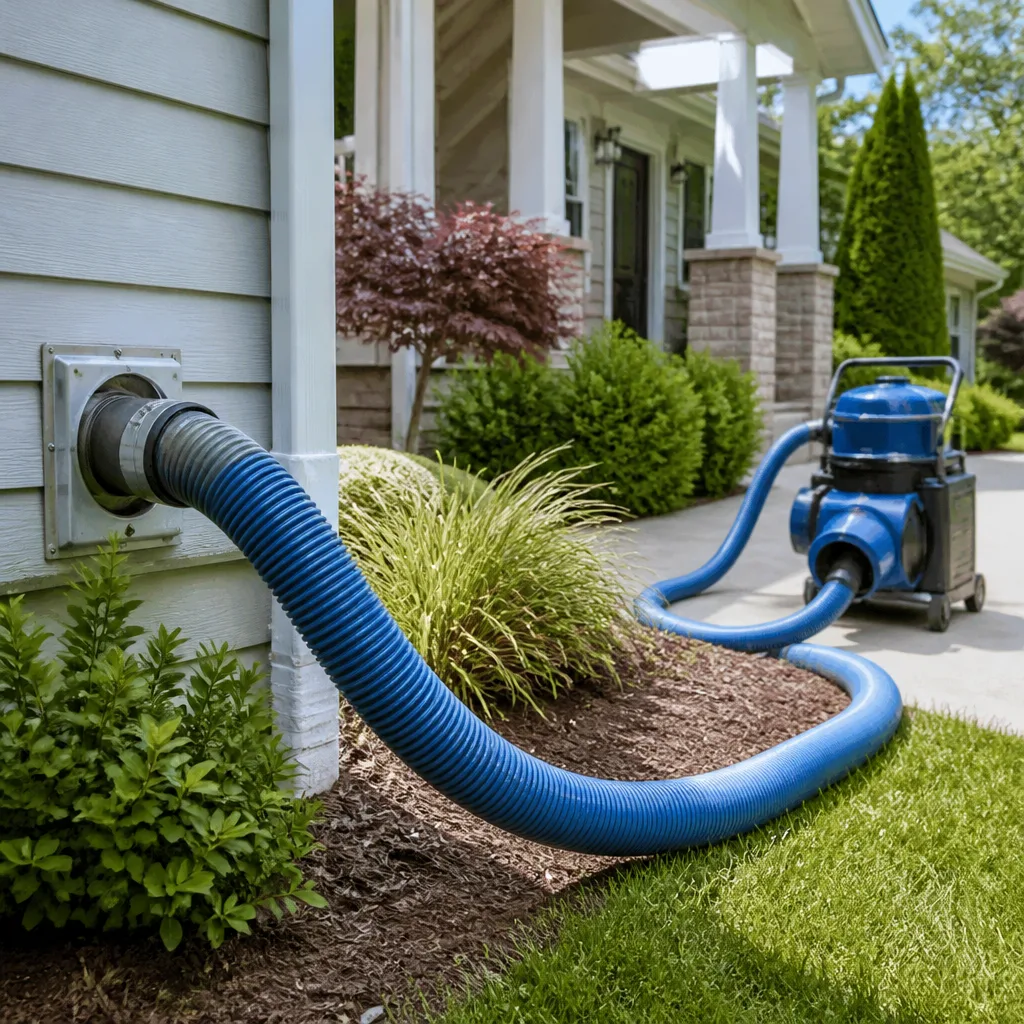 Whole-home duct cleaning
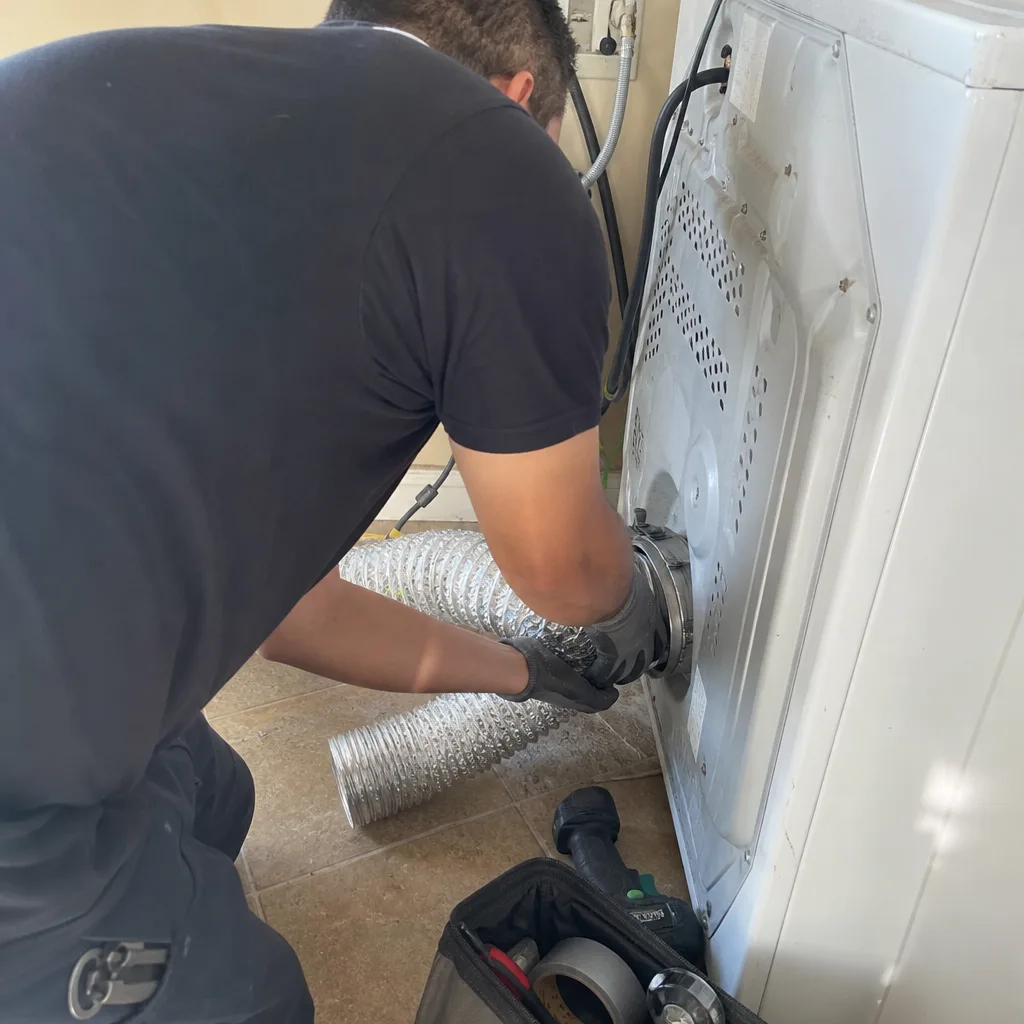
 Dryer vent cleaning
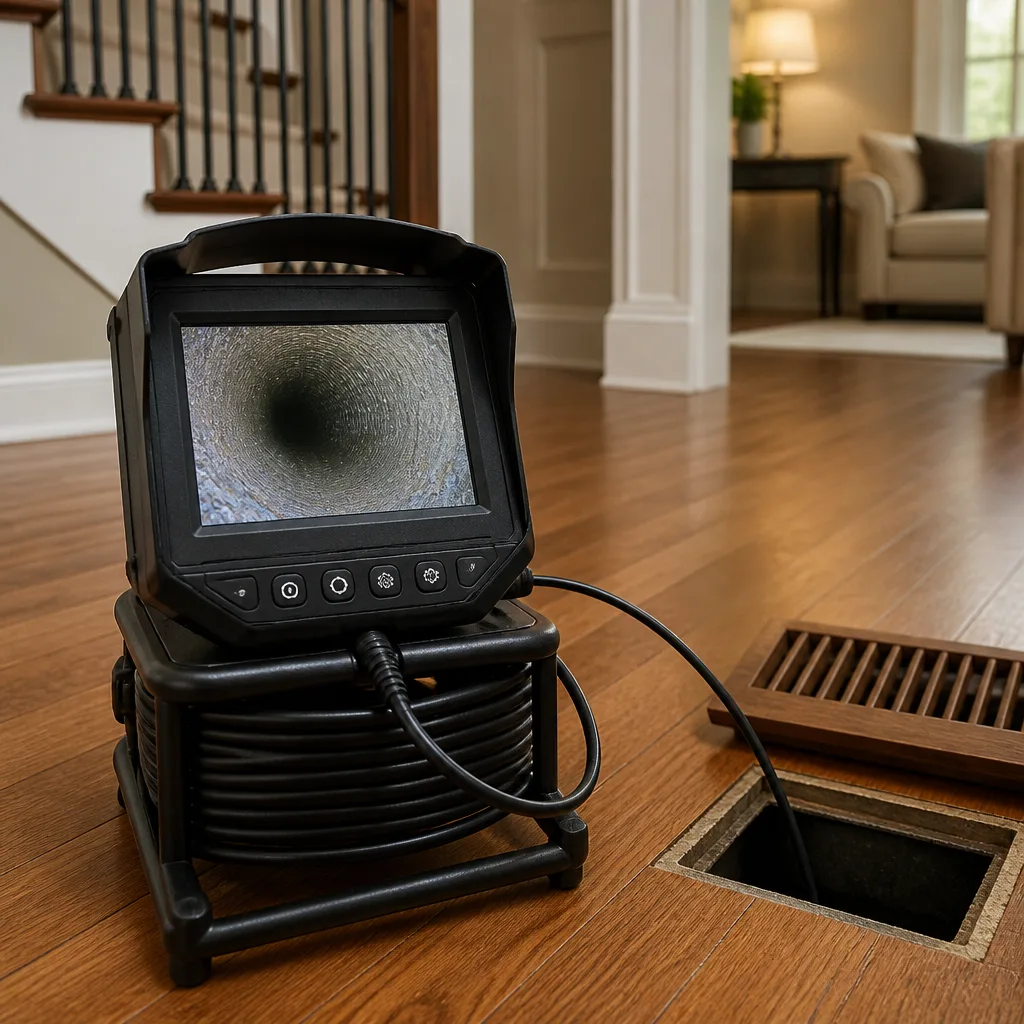 Camera inspection
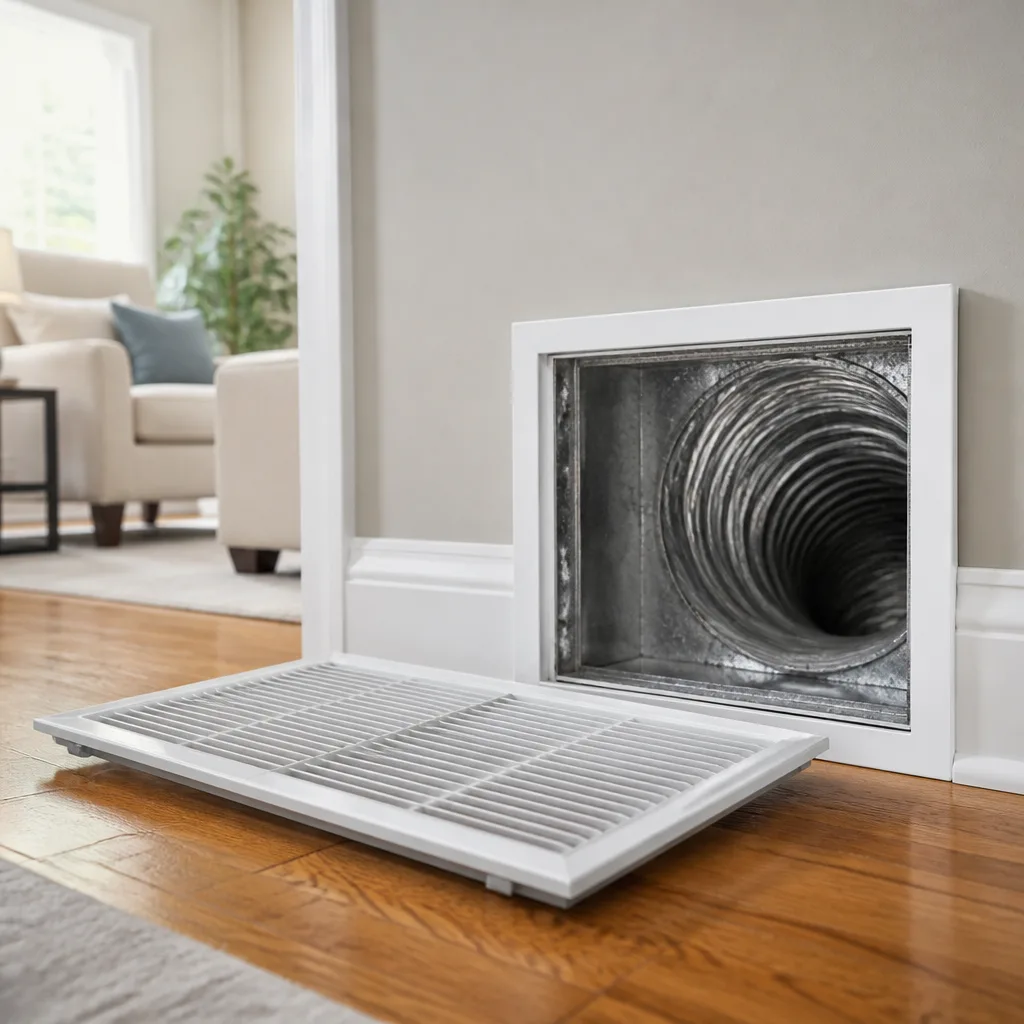 Sanitizing & deodorizing
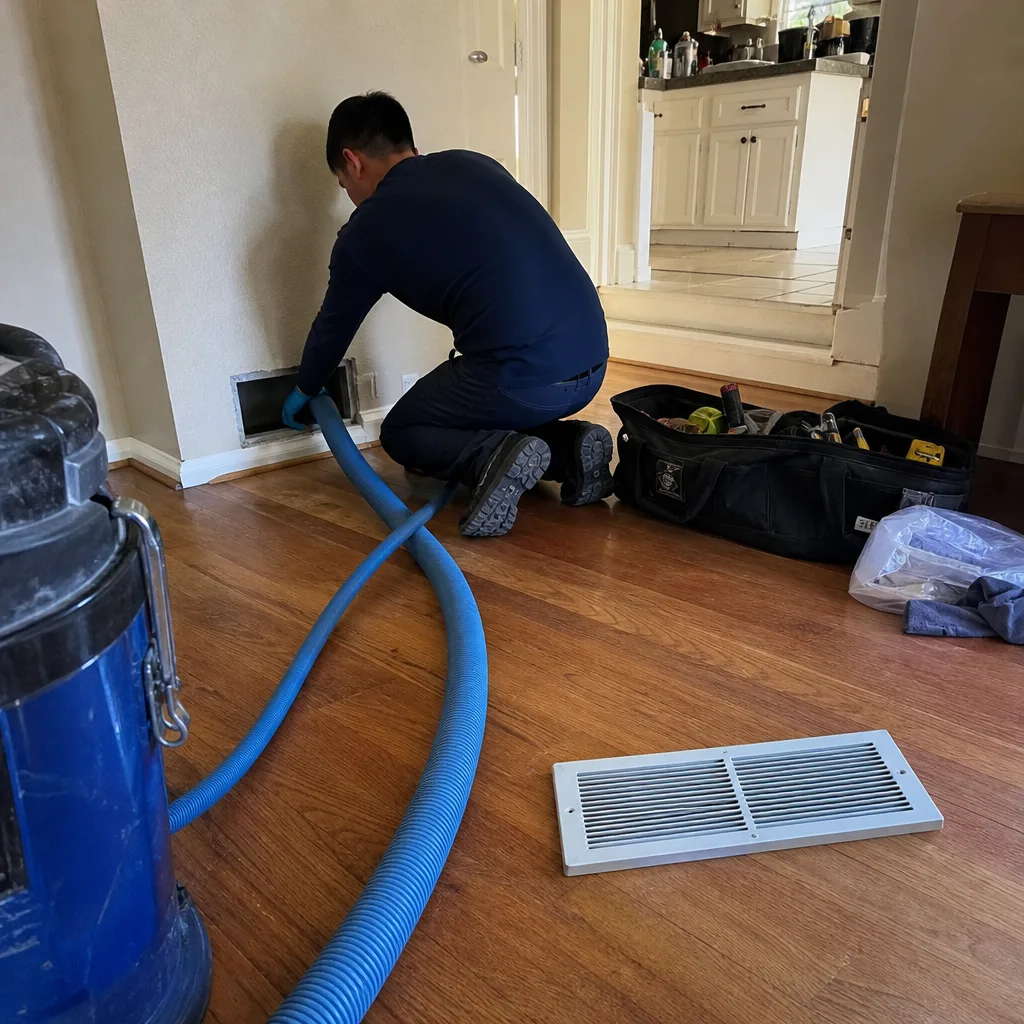
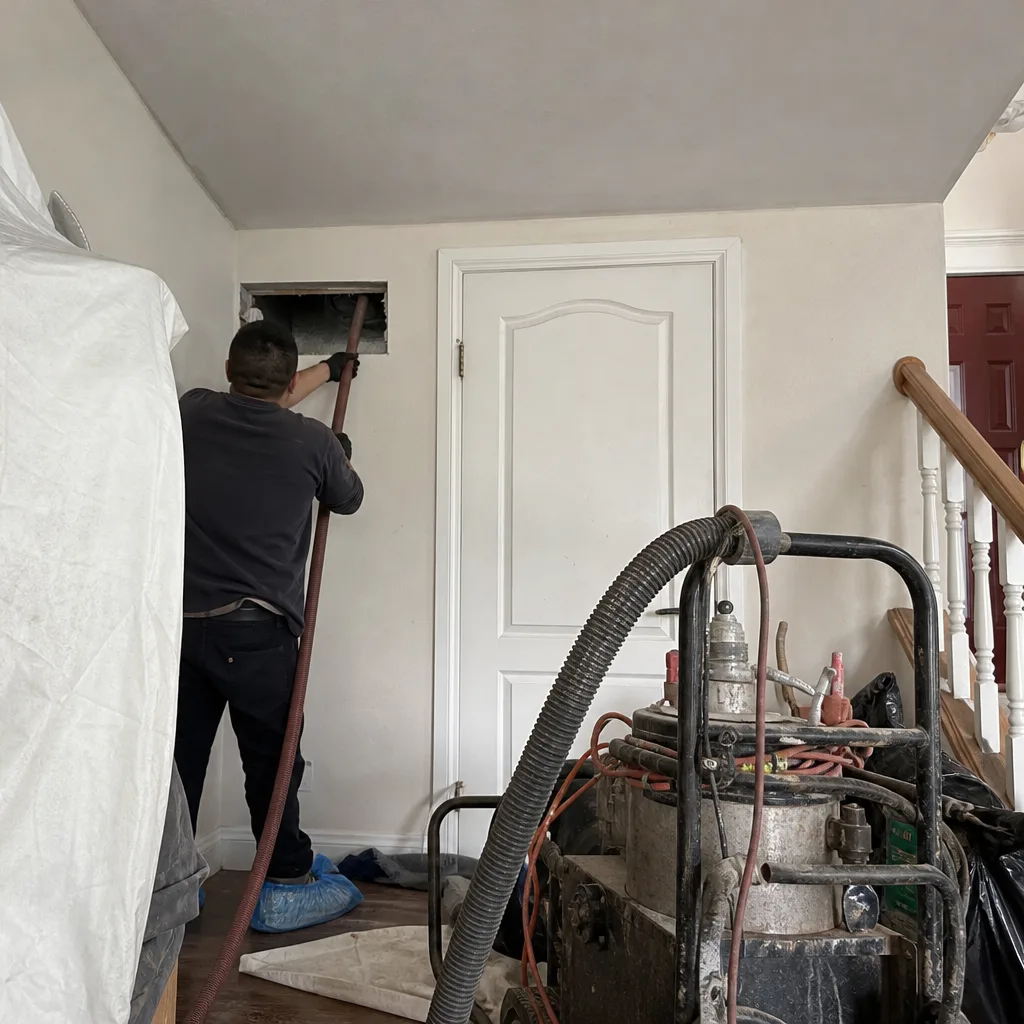
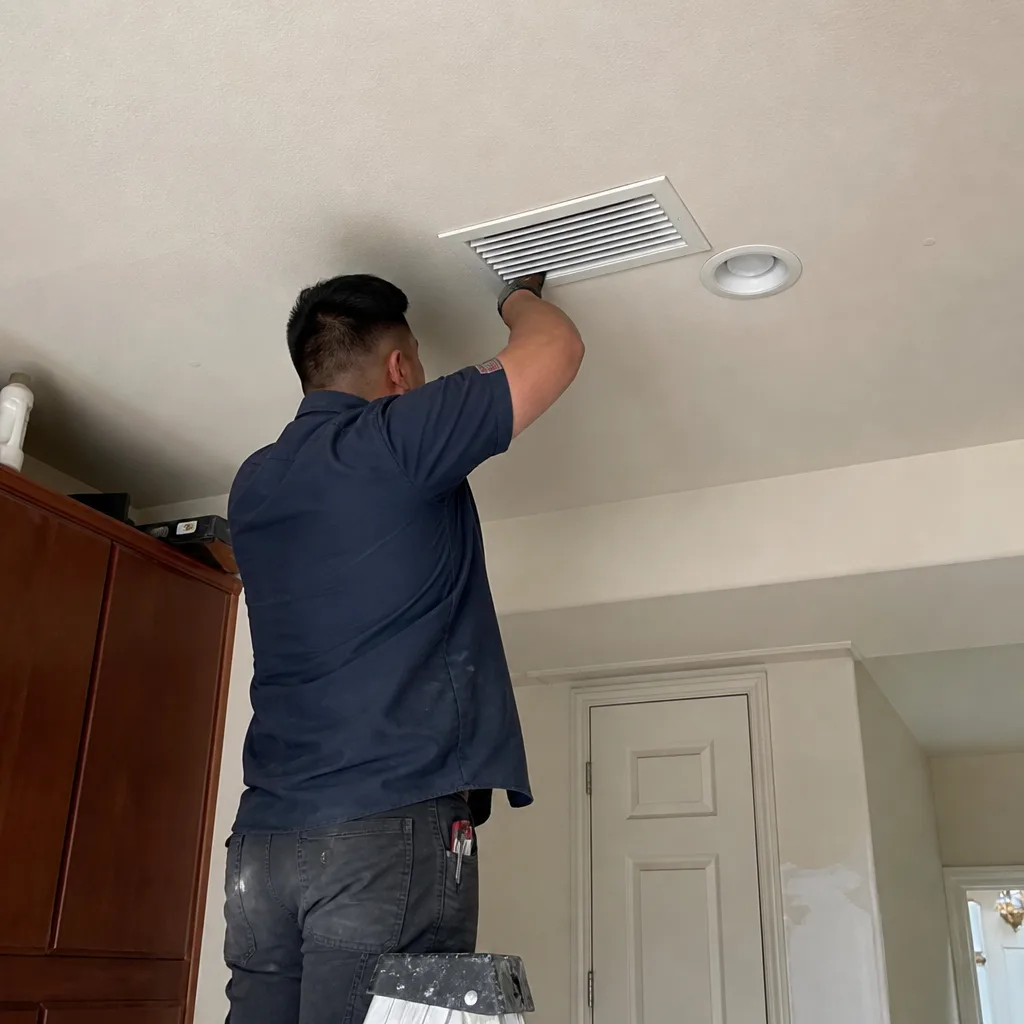
Whole-system duct and dryer vent check with before-and-after photos - you see exactly what came out of your vents
That "$99 whole-house special" is a bait ad - the real number appears once they are in your hallway, or the "clean" is a shop-vac at the register. We photograph the inside of your ducts before and after instead.
Air Duct Cleaning Warning Signs: A Sunnyvale Homeowner’s Reference Guide
Here’s something most Sunnyvale homeowners don’t realize: the dust that reappears on your registers two days after you wipe them down often has nothing to do with how recently your ducts were cleaned. It’s usually a leakage problem. Your ductwork is pulling unfiltered air from an attic that hits 140 degrees in August or a crawlspace carrying decades of particulate fallout, and it’s delivering that air directly into your living room. This guide will teach you how to read the signs your house is already giving you, separate duct problems from equipment problems, and know when a cleaning will actually solve the issue versus when you’re looking at a repair. Because in Sunnyvale’s aging housing stock, those two things are more connected than most people think.
Styles & brands we work with
- Whole-home duct cleaning
- Dryer vent cleaning
- Camera inspection
- Sanitizing & deodorizing
Quick Answer
The most reliable air duct cleaning warning signs in Sunnyvale homes are visible dust accumulation on registers within days of cleaning, musty or burning odors that appear only when the HVAC runs, uneven room temperatures across the same floor, unexplained spikes in allergy or asthma symptoms that correlate with system runtime, and utility bills that climb without a corresponding change in weather or usage. If you notice any combination of these, your ducts are either obstructed, leaking, or contaminated, and the fix may involve more than cleaning alone.
Table of Contents
- Dust Returning Within 48 Hours: The Leakage Signal
- Odor Signatures: What Different Smells Actually Mean
- HVAC Performance Metrics That Point to Duct Obstruction
- Allergy and Asthma Spikes: The Runtime Correlation Test
- Signs a Previous Cleaning Was Done Incorrectly
- Why Sunnyvale Homes Are Particularly Vulnerable
- Common Mistakes to Avoid
- When to Call a Professional
- Frequently Asked Questions
Dust Returning Within 48 Hours: The Leakage Signal
Visible dust on registers within 48 hours of cleaning is almost never a cleaning failure. It’s a duct leakage problem. Here’s what’s happening: your HVAC system operates under pressure. When the blower runs, it creates positive pressure in the supply ducts and negative pressure in the return ducts. If either side has gaps, cracks, or disconnected sections, that pressure differential actively pulls outside air into the system. In Sunnyvale, that outside air comes from attics packed with blown-in insulation fibers or crawlspaces with decades of accumulated particulate. No cleaning frequency will fix this without sealing.
Here’s a simple test any homeowner can perform. It takes about ten minutes and requires nothing more than a tissue.
- Turn your HVAC fan to the “ON” position at the thermostat so it runs continuously, independent of heating or cooling.
- Wait five minutes for pressure to stabilize throughout the duct system.
- Hold a single-ply tissue near the gap between the register and the wall or ceiling. Don’t press it against the register. Hold it about one inch away.
- Watch for movement. If the tissue pulls toward the register when the system is running, you have return-side leakage pulling wall cavity or attic air into the airstream.
- Repeat at each register in the house. Note which rooms show pull and which don’t. A pattern of pull in specific rooms often maps to duct runs that pass through a particular attic or crawlspace zone.
This test works because it isolates leakage at the register boot connection, which is one of the most common failure points in Sunnyvale homes built before current building codes tightened sealing requirements. If the tissue pulls inward, your system is ingesting whatever surrounds that register, and no amount of surface dusting will keep the room clean until that connection is sealed.
What Normal Post-Cleaning Dust Looks Like
Understanding the difference between normal dust resettlement and active leakage matters because it determines whether you need another cleaning or a repair. After a professional cleaning, some fine particulate will settle out of the airstream for a few days. That’s normal. This dust is typically:
- Light gray or white and extremely fine, almost powder-like in consistency
- Concentrated on surfaces directly below or adjacent to registers, not spread across the entire room
- Diminishing steadily over the first week, not increasing
- Present in roughly equal amounts across all rooms served by the system
Leakage-driven dust looks different. It’s often darker, sometimes slightly gritty, and it reappears consistently. It may contain visible fibers from insulation or particles that look like fine sand, which in Sunnyvale attics frequently means degraded fiberglass or particulate from older construction materials. If you’re seeing this pattern, the issue isn’t that your ducts are dirty. It’s that your ducts are open to a dirty environment. Our Air Duct Repair in Sunnyvale service addresses exactly this failure mode, because cleaning a leaking system is like bailing water from a boat without patching the hole.
Odor Signatures: What Different Smells Actually Mean
Smells are one of the most reliable diagnostic tools for duct condition, but only if you know how to read them. In our experience serving Sunnyvale homes, we’ve found that most homeowners misattribute odors to the wrong source, often assuming a dirty system when the smell is actually equipment-related, or vice versa. Here’s how to parse what your nose is telling you.
Musty or Earthy Odor
A musty smell that appears when the HVAC runs most often indicates microbial growth somewhere in the system. In Sunnyvale’s climate, this typically happens in two places: the evaporator coil during summer cooling season, when condensation creates persistent moisture, or inside fiberglass duct liner that has absorbed moisture from a past leak or humidity event. The key diagnostic question is whether the smell persists year-round or appears seasonally. If it’s present only during cooling months, the coil is the likely source. If it’s present whenever the fan runs regardless of season, you’re likely dealing with contaminated duct surfaces. Both scenarios require different interventions, and a professional assessment is the fastest path to an accurate diagnosis.
Burning or Electrical Smell
A burning smell that appears when the heat runs is usually not a duct issue at all. It’s most commonly dust that has settled on the heat exchanger during the off-season and is now burning off. This smell should dissipate within an hour or two. If it persists beyond that, or if it has a decidedly electrical or acrid character, shut the system down and call an HVAC technician. Persistent burning odors can indicate a failing blower motor, overheating components, or worse. Ducts don’t create burning smells. They can, however, carry them from the equipment into every room if leakage or failed seals allow combustion-flavored air into the distribution path.
Chemical or Solvent Odor
Chemical smells are the least common and the most concerning. They can indicate off-gassing from recently installed materials, contamination from a past remodeling project, or a compromised duct section pulling air from a garage or utility space where chemicals are stored. In Sunnyvale, homes built in the 1960s and 1970s sometimes have return ducts that connect to the garage wall cavity, a now-outdated design that can pull vehicle exhaust, paint fumes, or stored solvent odors directly into the living space. If you smell anything chemical when the fan runs, identify the source before running the system further. This is one situation where the Duct Cleaning Sunnyvale home assessment process involves inspecting every duct run for improper connections to unconditioned or contaminated spaces.
HVAC Performance Metrics That Point to Duct Obstruction
Before you look at dust, look at your bills and your comfort patterns. Duct obstruction doesn’t announce itself with a dramatic failure. It shows up as subtle shifts in system behavior over months. Here are the three metrics that matter most.
Uneven Room Temperatures
When one bedroom stays five degrees warmer than the rest of the house on a Sunnyvale summer afternoon, and you’ve confirmed the register is open and the damper isn’t closed, the most likely culprit is restricted airflow in that particular duct run. This happens when accumulated debris narrows the effective diameter of the duct, or when a flex duct section has become pinched, kinked, or partially collapsed. The system is still producing cooled air; it just can’t deliver enough of it to that room. This is an obstruction problem, and cleaning may resolve it if the restriction is debris. If the duct itself is damaged, you need Air Duct Repair in Sunnyvale to restore the full diameter of the run.
Longer Cycle Times
When ducts are significantly obstructed, your system has to work harder to move the same volume of air. The result is longer run cycles to reach the same setpoint. You might notice the AC running almost continuously during peak afternoon heat when it used to cycle on and off. Part of this is normal for any system during a Sunnyvale heat spike. But if you compare the current season’s runtime to a previous season with similar temperatures and see a meaningful increase, duct restriction is one of the top causes alongside low refrigerant and dirty coils.
Utility Bill Creep
Energy costs in Sunnyvale have risen steadily, so a higher bill alone doesn’t indicate duct problems. What matters is the delta against weather-normalized expectations. If your July bill is 22% higher than last July and the average temperature was within a degree or two, something changed in your system’s efficiency. Duct leakage and duct obstruction both force the blower to run longer and work harder, which consumes more electricity. The blower motor itself draws more current when it has to overcome higher static pressure from restricted ducts. This is measurable, and it shows up on your bill before you’ll ever see it in register dust.
Allergy and Asthma Spikes: The Runtime Correlation Test
Here’s a cleaner diagnostic signal than visual dust: symptom correlation with HVAC runtime. If your allergy or asthma symptoms spike when the system runs, and improve when it’s off or when you’re away from home, the HVAC system is distributing something your respiratory system is reacting to. Visual register dust can be misleading, because it deposits on surfaces and may originate from the room itself rather than the ducts. Symptom correlation is harder to fake.
The test is simple in concept but requires some discipline. For two weeks, track your symptoms and your HVAC runtime. Note when symptoms worsen: is it within 30 minutes of the system turning on? Do symptoms improve overnight when the system cycles less frequently? Do they improve when you spend a day away from the house? If the answer to these questions is yes, the HVAC system is almost certainly part of the equation.
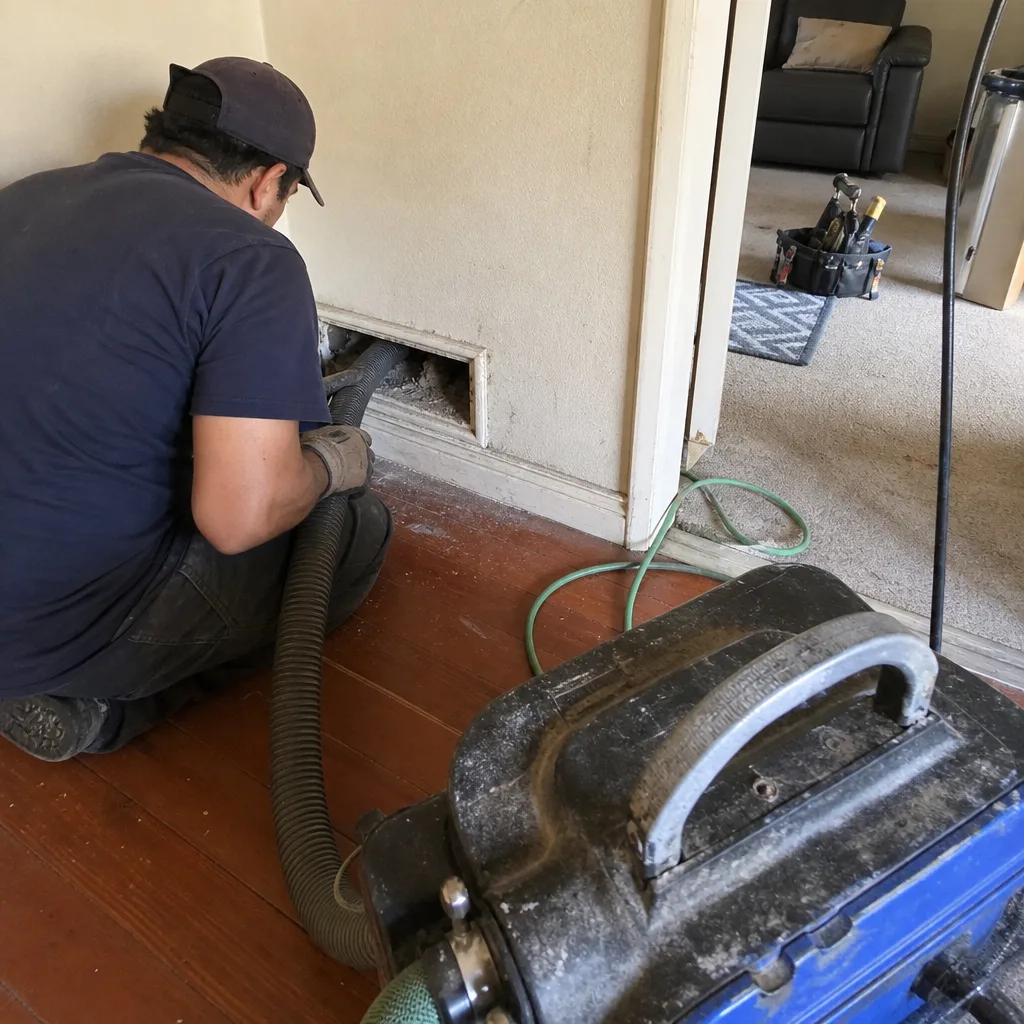
What’s actually being distributed matters for the fix. Common airborne irritants in Sunnyvale duct systems include accumulated pollen from the region’s long growing season, fine particulate that entered during past wildfire smoke events, dust mite byproducts from particulate that settled in duct surfaces, and mold spores from any moisture that found its way into the system. Our Air Duct Cleaning in Sunnyvale process uses Rotobrush rotary brush extraction and Nikro HEPA-rated vacuum equipment to remove this material rather than simply loosen it, which is the distinction between cleaning and redistribution. For homeowners with persistent respiratory concerns, we also discuss air quality systems from Aprilaire and Guardsman that integrate with the existing HVAC to address what cleaning cannot, which is the continuous introduction of new particulate into the home envelope.
Signs a Previous Cleaning Was Done Incorrectly
Not all duct cleanings are equal. We follow up behind a surprising number of previous cleanings in Sunnyvale where the work was either incomplete or actively damaging. Here’s what to look for if you suspect your last cleaning caused more problems than it solved.
Collapsed Flex Duct Sections
Flexible duct, the accordion-style tubing used extensively in Sunnyvale homes built since the 1980s, can be collapsed by aggressive cleaning methods. If a technician pushes a brush too hard through a flex run, or uses an undersized hose that catches on the interior ridges, the internal spring wire can deform. The duct then appears pinched or flattened, severely restricting airflow. You can sometimes see this from the attic if the flex run is visible. You can also detect it through room-specific airflow loss: the room served by that run will be noticeably warmer or cooler than the rest of the house.
Disturbed Insulation at Boot Connections
The boot is the metal fitting that connects the duct to the register. In attics, these connections are often wrapped with insulation or sealed with mastic. An improper cleaning can disturb these connections, pulling the boot away from the drywall or breaking the seal. The result is exactly the leakage scenario described earlier: the system begins pulling attic air around the register. After a cleaning, check your registers. If you see any gap between the register and the surrounding ceiling or wall, or if you notice insulation fibers near the register face, the boot connection was likely compromised during the cleaning.
Missing Register Covers
This one is simple but surprisingly common. Cleaning crews sometimes remove register covers to access the duct and fail to reinstall them properly or at all. A missing or loose register creates an open path for unconditioned air to enter the living space, and it can also create a safety hazard if the register is in a floor location. After any cleaning, walk through the house and verify every register is present and firmly seated. If one is missing, the cleaning company should be called back immediately. This is basic quality control, and it’s one reason we document every register before and after each job we perform.
Why Sunnyvale Homes Are Particularly Vulnerable
Every city has its own pattern of duct problems, shaped by climate and construction history. Sunnyvale’s pattern is distinctive. Understanding it helps you know what to watch for in your specific home.
Aging Housing Stock
A significant portion of Sunnyvale’s housing stock was built during the post-war boom and the subsequent expansion decades. Homes from the 1950s through the 1970s often have rigid metal ducts that have been in service for fifty to seventy years. These ducts were frequently assembled with basic sheet metal screws and cloth tape, not the mastic sealant and UL-rated tapes required by modern codes. Over decades of thermal cycling, those connections loosen. The result is widespread small leaks along the entire duct run, not a single dramatic failure. This is why older Sunnyvale homes often have dusty interiors despite regular cleaning, and why sealing is frequently the higher-value intervention than cleaning alone.
Regional Air Quality Events
Sunnyvale sits in the Santa Clara Valley, and while coastal influence moderates its climate compared to inland cities, the region experiences wildfire smoke events that can last for days or weeks. During these events, outdoor particulate penetrates homes through every available opening, including the HVAC system if it draws any outside air or operates while doors and windows are opened periodically. That ultrafine smoke particulate settles into duct surfaces and remains there, becoming a reservoir that re-enters the airstream whenever the system runs. Homes that experienced multiple smoke events without subsequent duct cleaning often show significant particulate loading deep in the system, material that routine filter changes never touch.
Crawlspace Construction
Many older Sunnyvale homes sit on crawlspace foundations rather than slabs. Duct runs through crawlspaces are exposed to higher humidity than attic runs, especially during winter months when the ground holds moisture. This moisture exposure degrades duct insulation, encourages corrosion on metal duct surfaces, and in severe cases contributes to mold growth on organic material inside the ducts. Homes with crawlspace ductwork should be inspected more frequently than homes with attic runs, simply because the environment is harsher. If you own an older Sunnyvale home with a crawlspace, pull the access panel and look at the condition of the ducts running through it. If the insulation jacket is sagging or showing signs of pest activity, the ducts need attention regardless of when they were last cleaned.
Common Mistakes to Avoid
- Assuming dust on registers means the ducts need cleaning. As this guide has established, recurring dust within days of cleaning usually indicates leakage, not dirt. Sealing the system is the fix, not another cleaning. Get a professional assessment before paying for a service that won’t solve the problem.
- Using a shop vac or DIY brush kit on duct surfaces. Consumer-grade equipment lacks the reach and negative pressure to extract what it dislodges. It loosens material without removing it, which often makes the indoor air quality temporarily worse. Professional-grade Rotobrush and Nikro equipment exists for a reason: it cleans and extracts simultaneously.
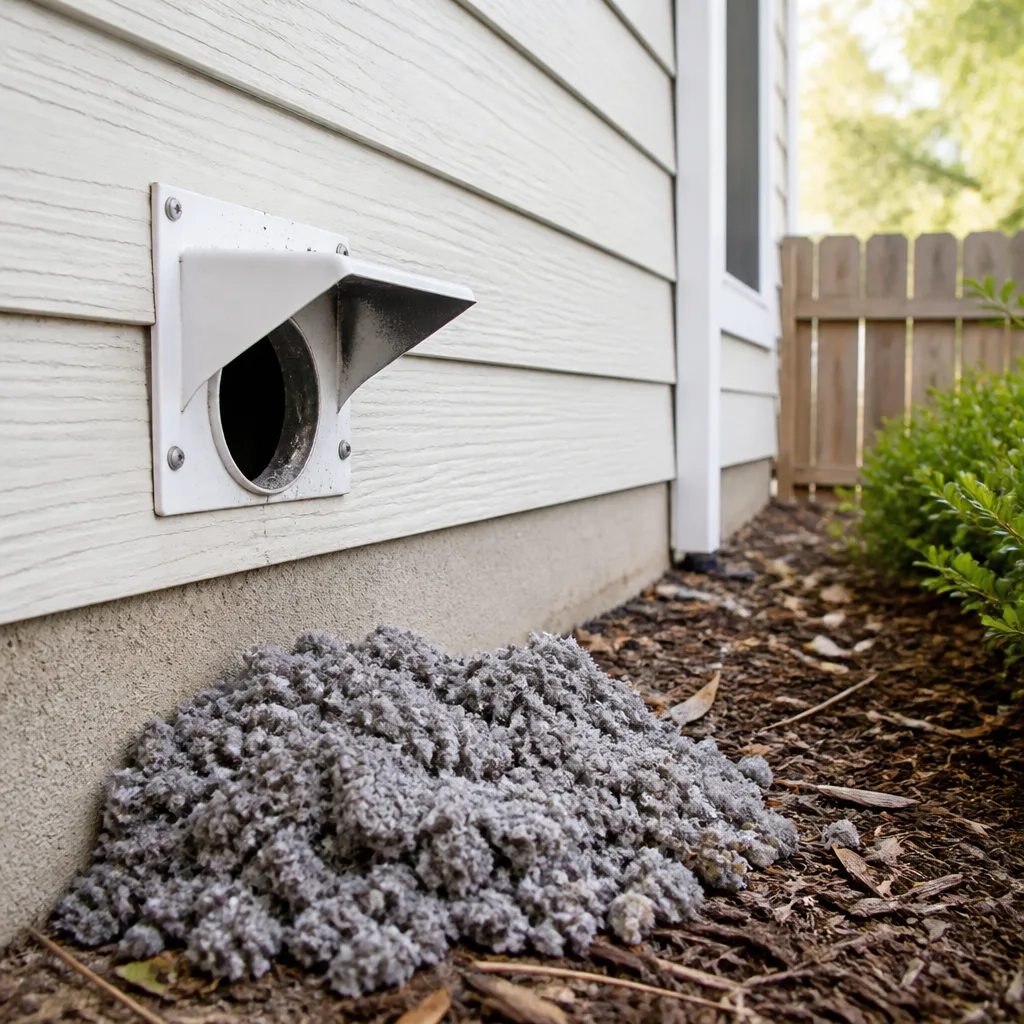
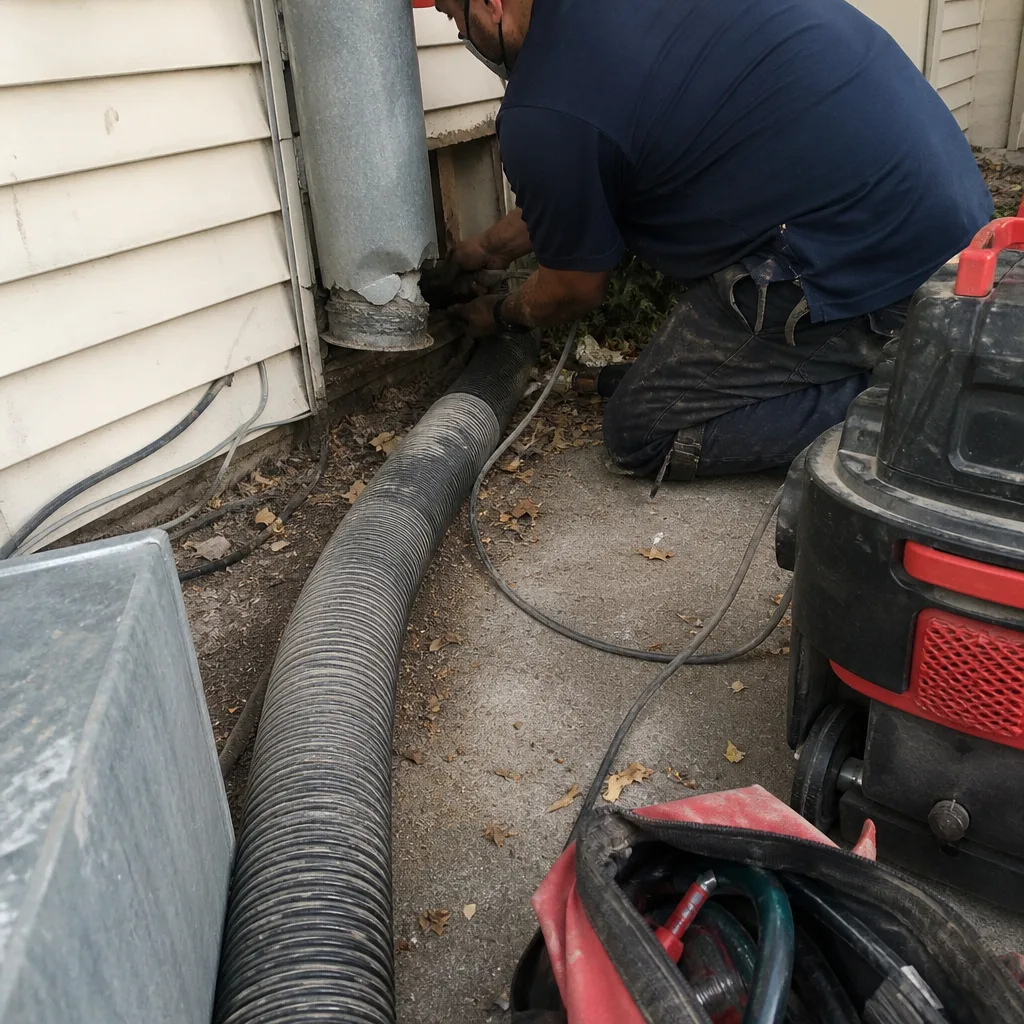
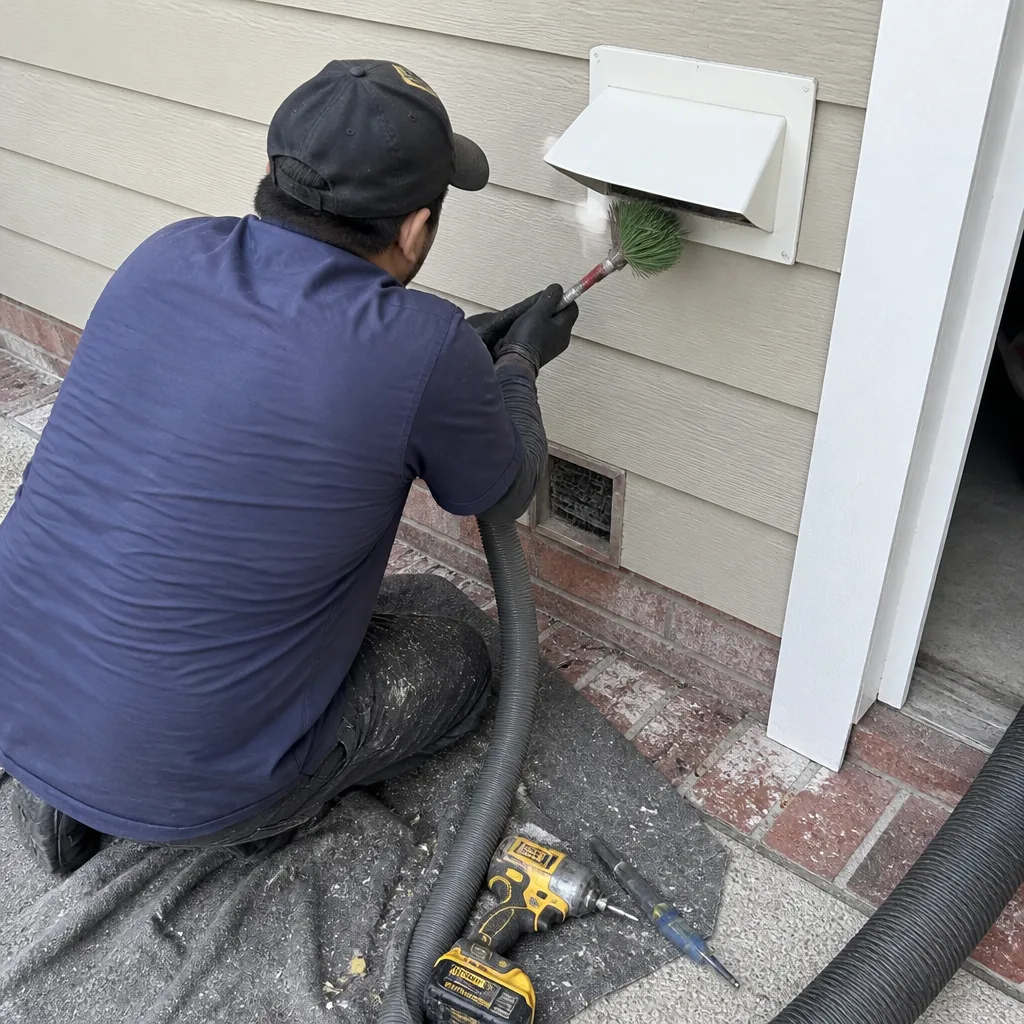
- Ignoring the dryer vent because the dryer still works. A functioning dryer can still have a dangerous exhaust restriction. Lint accumulates inside the vent over years, and a dryer with a restricted vent runs hotter and works harder. In Sunnyvale, where long vent runs through walls are common in two-story homes, this restriction can reach dangerous levels before the dryer shows any functional symptom. Dryer Vent Cleaning in Sunnyvale should be treated as a fire-safety service, not an optional add-on.
- Assuming a new HVAC system means clean ducts. New equipment doesn’t clean existing ductwork. If you replace a furnace and condenser but keep fifty-year-old ducts, you’re moving clean air through dirty passages. The ducts should be assessed and cleaned or sealed as part of any major equipment replacement.
- Using a high-MERV filter without checking static pressure. High-efficiency filters restrict airflow. In systems with marginal duct design, which includes many older Sunnyvale homes, a MERV 13 filter can push static pressure high enough to reduce airflow significantly. This can mimic duct obstruction symptoms and increase runtime. Verify your system can handle the filter you’re using.
- Sealing registers in unused rooms to save energy. This is counterproductive in most residential systems. Closing registers raises static pressure throughout the duct system and can force air through existing leaks. It doesn’t save energy; it wastes it and accelerates duct damage.
When to Call a Professional
Some situations call for an experienced eye and the right equipment before you make a decision. Call a professional if you’ve confirmed recurring register dust that returns within days of cleaning, if you smell persistent musty or chemical odors when the HVAC runs, if one room is consistently uncomfortable despite a functioning system, or if you suspect a previous cleaning damaged your ducts. In any of these scenarios, a diagnosis is the first step, because the right fix might be cleaning, sealing, repair, or some combination. Duct Cleaning Sunnyvale offers free estimates in Sunnyvale, and because we handle Air Duct Repair in Sunnyvale alongside cleaning and Dryer Vent Cleaning in Sunnyvale, you get one diagnostic visit that identifies the actual problem rather than one that defaults to whichever service a company happens to sell. Call (866) 593-7291 to schedule an assessment.
Frequently Asked Questions
Air duct cleaning in Sunnyvale typically costs between $400 and $800 for a complete system, depending on the size of the home, the number of vents, and the complexity of the duct layout. Homes with crawlspace access or extensive duct runs may fall at the higher end. Avoid providers quoting per-vent pricing; it’s a red flag pattern where a low initial quote balloons once the technician arrives. Get a fixed system price before work begins. Call (866) 593-7291 for an exact quote on your Sunnyvale home.
Cheap duct cleaning quotes usually come from companies using consumer-grade equipment, a single technician with a shop-style vacuum, or a bait-and-switch pricing model that expands once the job starts. Professional work requires commercial-grade negative air pressure equipment, which is expensive to own and maintain, and the labor cost of a thorough job is the labor cost. A $99 duct cleaning in Sunnyvale is not the same service as a $500 duct cleaning. The price difference reflects the equipment, the thoroughness, and the time invested.
A reputable company will provide before-and-after photos of the interior duct surfaces taken during the job, not just stock images. Ask for visual verification from your own ducts, particularly at the return plenum and any sections that showed heavy accumulation. You can also ask to see the material extracted during cleaning. If a company can’t show you what came out of your system, you have no way to verify what was actually done.
For most Sunnyvale homes, every 3 to 5 years is a reasonable interval. Homes with pets, recent remodeling, past wildfire smoke exposure, or occupants with respiratory conditions may benefit from more frequent service. Homes with significant duct leakage should seal first and clean second, because sealing what’s already there prevents recontamination and makes the cleaning last longer.
You cannot clean your air ducts yourself with equipment available to consumers. Consumer-grade tools reach only the first few feet of duct from the register, and they cannot create the negative pressure required to extract debris from the full system. Anything you dislodge with a brush that doesn’t get extracted will simply redistribute through the house when the system runs. Professional cleaning uses commercial equipment like Rotobrush rotary brush systems paired with HEPA-rated vacuum units to clean and extract simultaneously. Ductwork cleaning is not a DIY task.
Yes. Dryer vent cleaning is a fire-prevention measure, not a repair task. Lint accumulates inside the vent over months and years regardless of whether the dryer functions normally. A clogged dryer vent is a leading cause of house fires, and the accumulation often reaches dangerous levels before any functional symptom appears. In Sunnyvale, long vent runs through walls or ceilings are common and create restriction points where lint concentrates. Annual cleaning is the standard recommendation for most households.
The Bottom Line
The warning signs that matter in Sunnyvale homes are subtle: dust that returns within days, odors that appear only when the fan runs, rooms that won’t hold temperature, and symptom spikes tied to HVAC runtime. None of these are normal house behavior. They’re signals from a system that’s leaking, obstructed, or contaminated, and the right response is diagnosis before action. Cleaning solves what cleaning solves. Sealing and repair solve what cleaning never will. The two services, done in the right order by someone who understands both, are what actually restores indoor air quality. If you’re seeing these signs in your Sunnyvale home, get an assessment before you pay for a guess.
Written by the team at Duct Cleaning Sunnyvale, serving Sunnyvale since 2015.
See the difference
 Before
 After
 Before
 After
 Before
 After