
Last updated November 2, 2026
 Whole-home duct cleaning
 Dryer vent cleaning
 Camera inspection
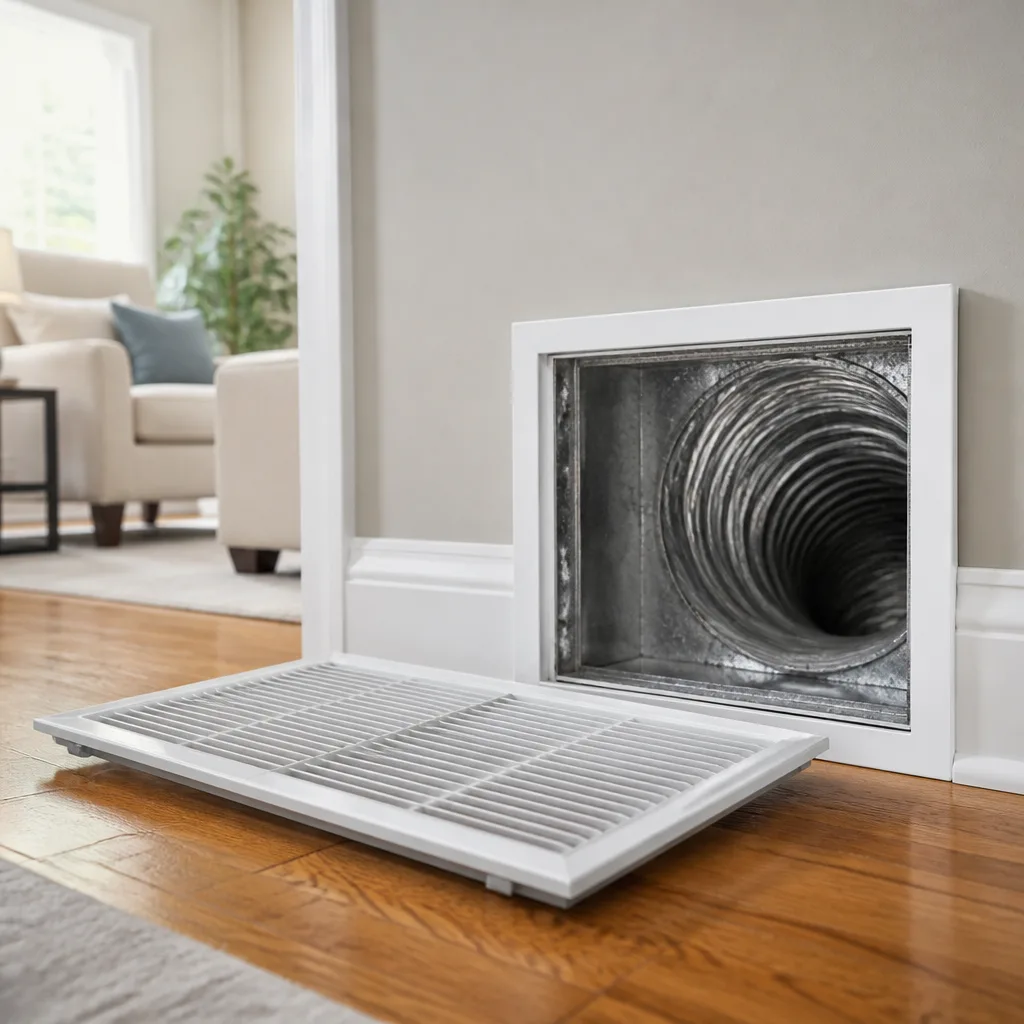 Sanitizing & deodorizing
Whole-system duct and dryer vent check with before-and-after photos - you see exactly what came out of your vents
That "$99 whole-house special" is a bait ad - the real number appears once they are in your hallway, or the "clean" is a shop-vac at the register. We photograph the inside of your ducts before and after instead.
The Complete Air Duct Cleaning Guide for Sunnyvale Homeowners
Most duct cleaning guides tell you to clean every 3 to 5 years. That interval was written for the Midwest, where houses run forced air for a few months each winter. It does not account for a city that sits in the smoke corridor of Northern California wildfires, runs HVAC systems nearly year-round in a Mediterranean climate, and manages coastal humidity that turns fine ash into a paste inside duct walls. This guide walks you through the full process: inspection, cleaning, verification, and when cleaning alone is not the fix. You’ll learn what competent work looks like in Sunnyvale before anyone touches your system.
Styles & brands we work with
- Whole-home duct cleaning
- Dryer vent cleaning
- Camera inspection
- Sanitizing & deodorizing
Quick Answer
Air duct cleaning in Sunnyvale should be scheduled every 2 to 3 years, not the generic 3 to 5 year recommendation that ignores wildfire smoke exposure and heavy HVAC use. A proper job includes pre-cleaning video inspection, negative-air extraction with HEPA filtration, and a written post-cleaning report documenting what was measured and removed. If your ducts are damaged or disconnected, cleaning is not enough: they need repair first.
Table of Contents
- Why Sunnyvale Needs a Different Duct Cleaning Schedule
- What a Complete Air Duct Cleaning Job Actually Includes
- Why Pre-Cleaning Video Inspection Matters More Than You Think
- Rotobrush and Nikro: What Professional Equipment Does That a Shop Vac Cannot
- Post-Cleaning Verification: What You Should Receive as Documentation
- When Duct Cleaning Is Not Enough: Signs You Need Repair or Sealing
- Dryer Vent Cleaning: A Separate Fire Safety Service, Not an Upsell
- What Air Duct Cleaning Costs in Sunnyvale
- Common Mistakes to Avoid
- When to Call a Professional
- Frequently Asked Questions
- The Bottom Line
Why Sunnyvale Needs a Different Duct Cleaning Schedule
Sunnyvale homes accumulate what we call layered contamination. Ordinary household dust settles first: skin cells, pet dander, fabric fibers. Then pollen from the valley’s spring season. Then, during wildfire months, PM2.5 particles ride the air currents into your return ducts and coat everything. PM2.5 is fine enough to stay suspended for weeks and small enough to slip through a standard fiberglass furnace filter. Once it settles inside ducts, it binds with the existing dust and hardens, especially when Bay Area humidity spikes in the summer evening marine layer.
The average home in Sunnyvale runs its HVAC system between 7 and 10 months of the year, which means the blower is actively pulling particulates through the ductwork for longer stretches than homes in most of the country. That extended runtime is not a flaw, it is how Mediterranean climate homes stay comfortable. But it means the air distribution system moves far more total cubic feet of air per year than a Midwestern system, and each cubic foot carries whatever the filter did not catch.
Here is the practical takeaway: if you wait five years between cleanings, you are not cleaning a normal amount of household dust. You are cleaning three to five years of accumulated wildfire particulates, compacted by humidity, in a system that has been actively recirculating that contamination every time the furnace or AC kicked on. A 2 to 3 year interval is what we recommend for most Sunnyvale single-family homes.
What a Complete Air Duct Cleaning Job Actually Includes
A competent air duct cleaning follows a structured sequence. If a company quotes you a price without mentioning any of the following steps, walk away. Duct cleaning that involves only one access point and a vacuum hose is a filter cleaning, not a duct cleaning. Here is what the full scope looks like:
- System inspection and static pressure check. The technician should inspect both the supply and return sides, check for visible damage at the registers, and note whether airflow feels restricted in any zone of the house. This baseline matters because it reveals blockages before cleaning begins.
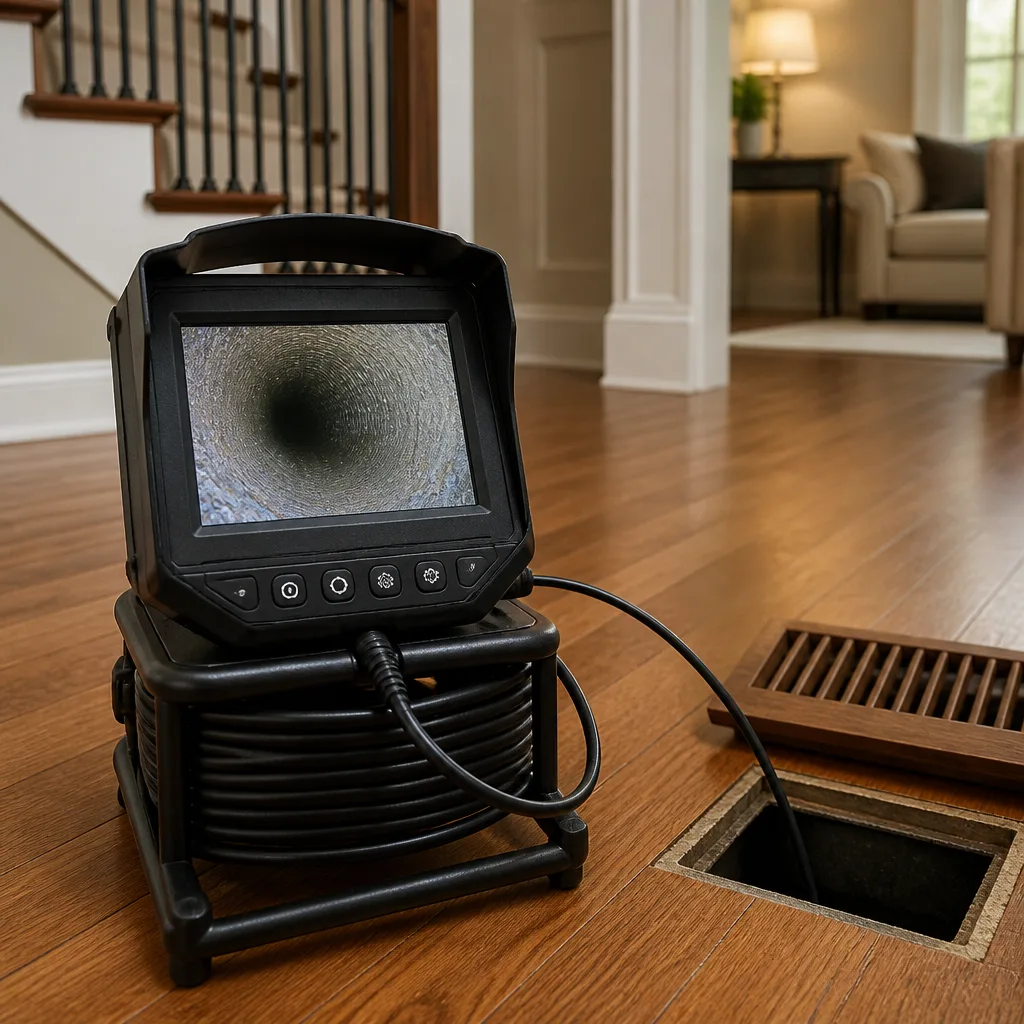
- Pre-cleaning video inspection. A small camera is run through the main trunk lines and branch runs. This documents flex duct collapse, disconnected joints, water staining, pest activity, and mold pockets that surface cleaning would miss.
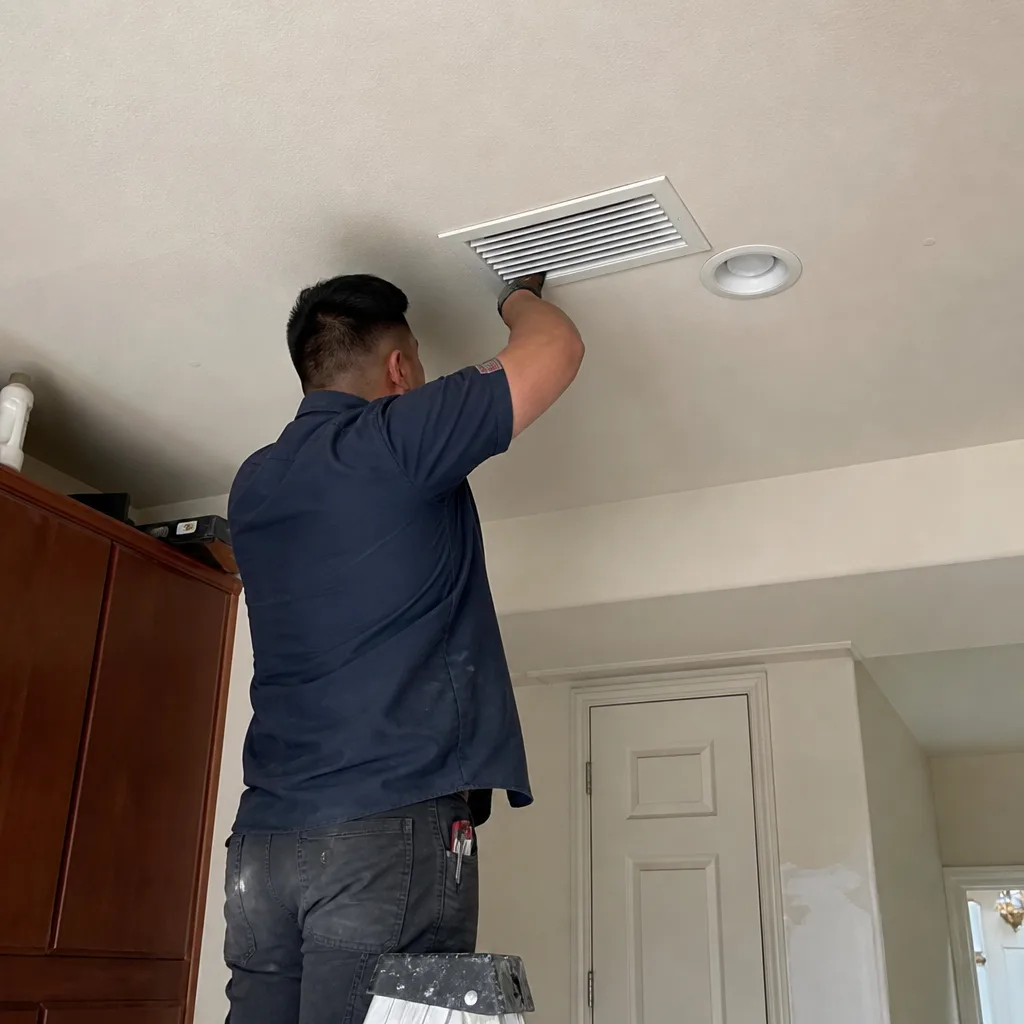
- Register and grille removal and cleaning. Every vent cover is removed, cleaned, and set aside. The technician should cover or seal each open register during the agitation phase unless the equipment requires a specific access configuration.
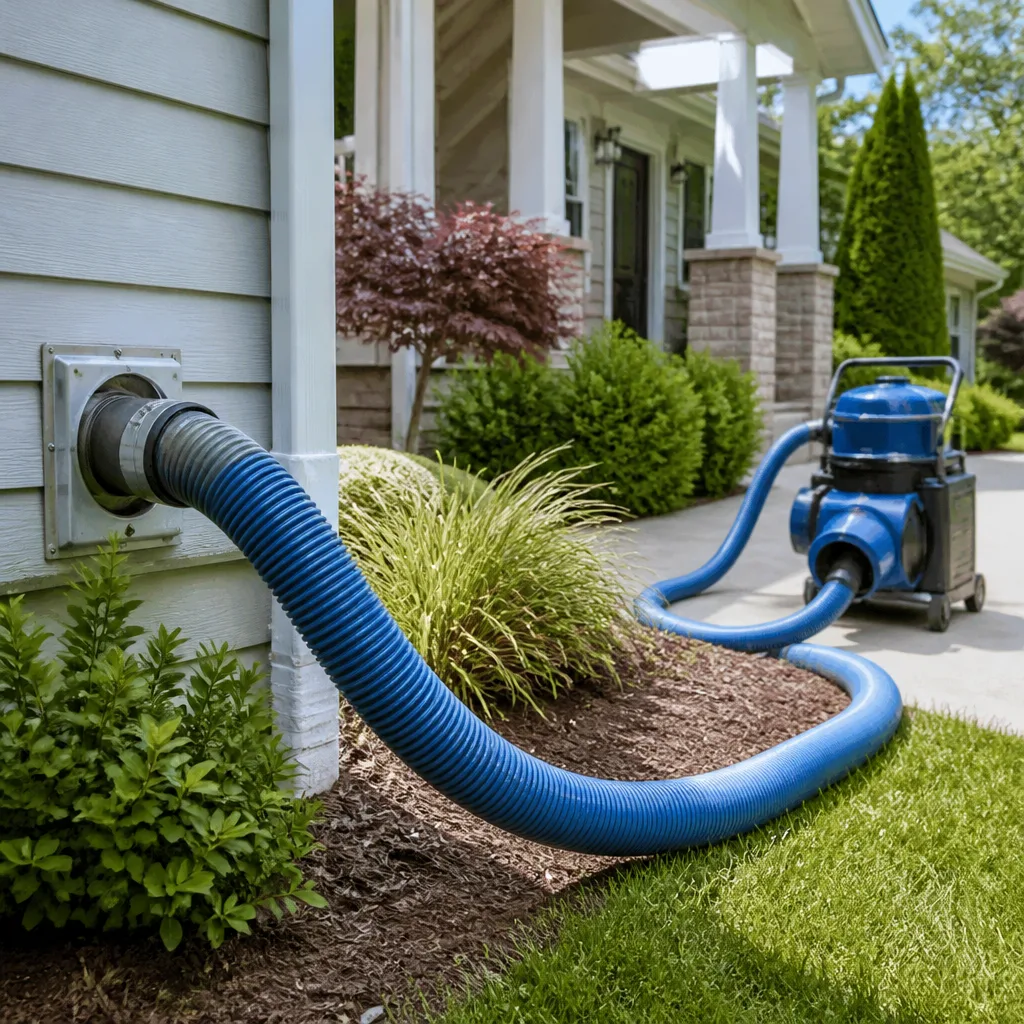
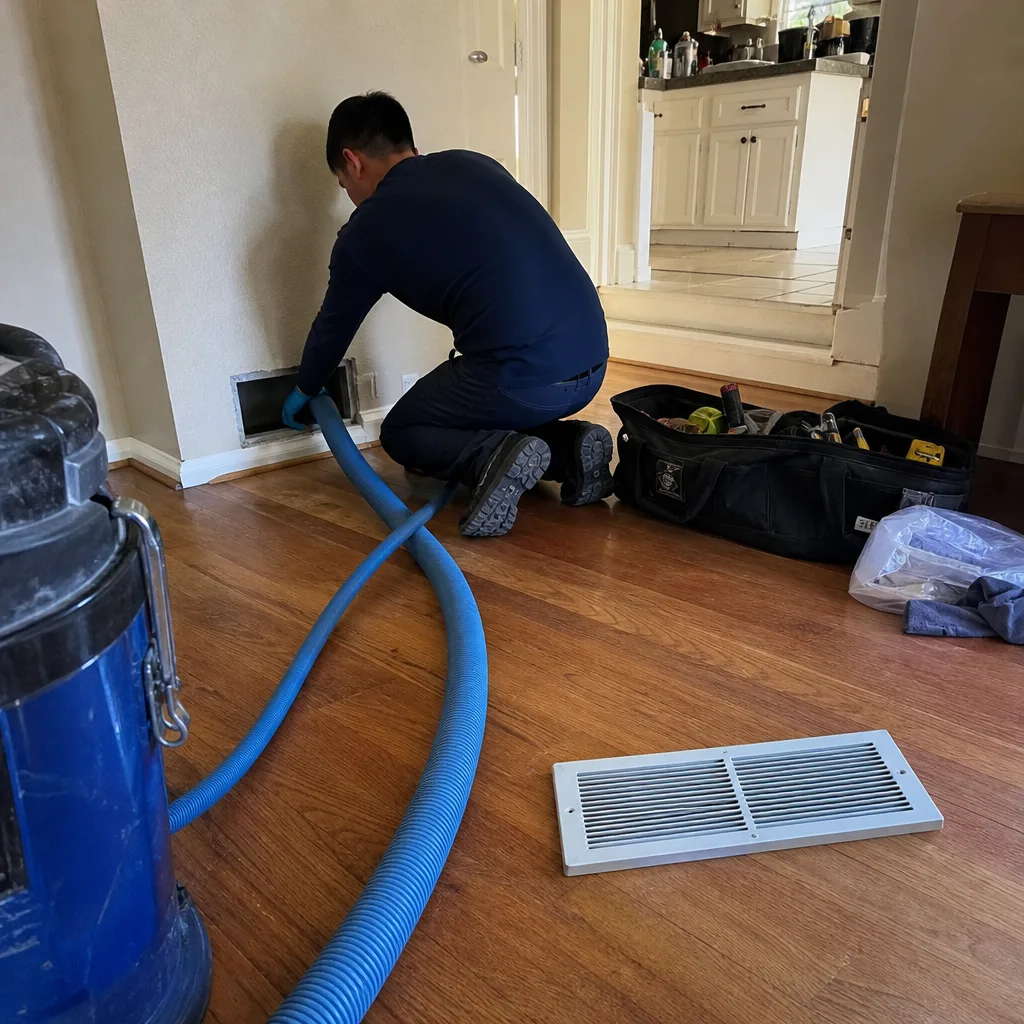
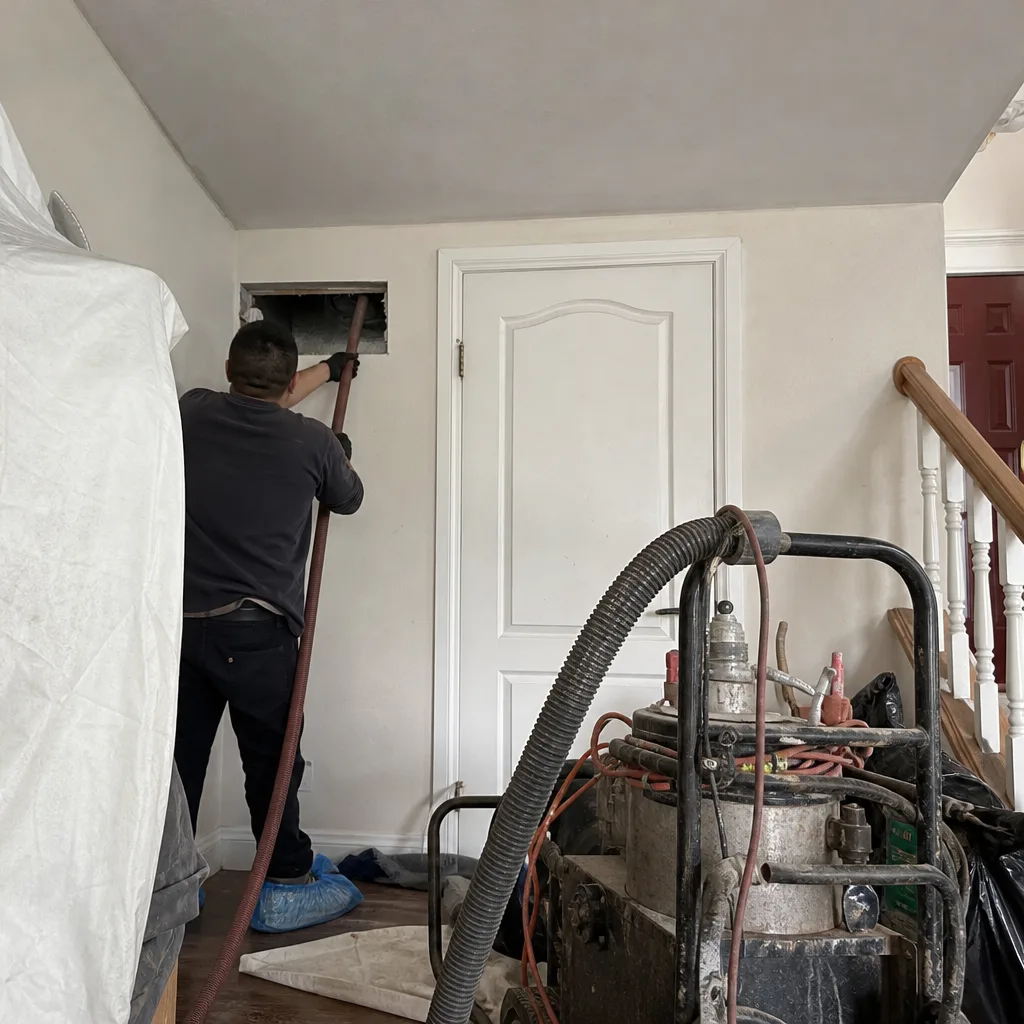
- Negative-air extraction setup. A high-powered HEPA-rated vacuum unit is connected to the duct system, creating negative pressure. This is the critical step: negative air means every dislodged particle is pulled toward the vacuum, not pushed into your living space.
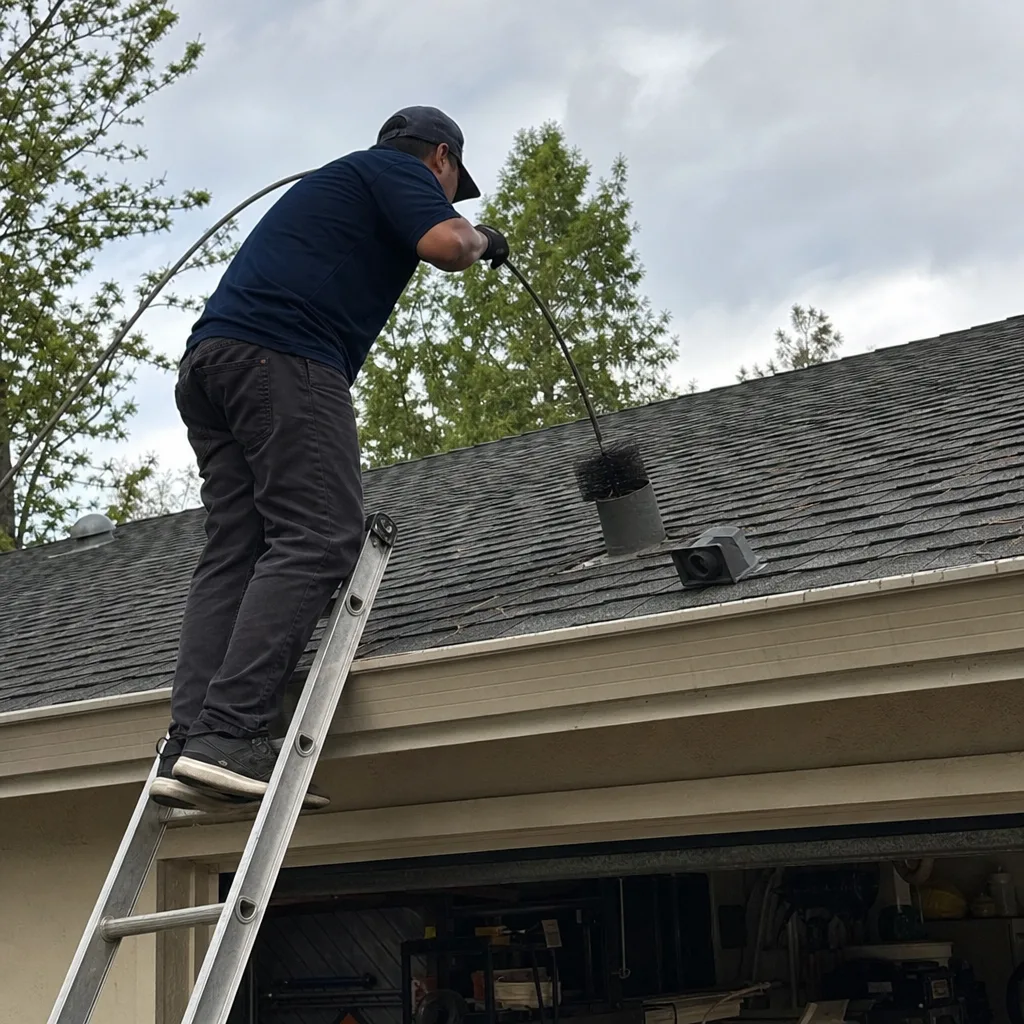
- Mechanical agitation. Rotary brush equipment is run through the full length of each duct run to physically break the bond between accumulated particulates and the duct surface. This is where Rotobrush systems earn their keep: they scrub, not just suck.
- Post-cleaning video inspection. The camera runs through the same ducts again so you can see the surface before and after. You should be shown these images, side by side.
- System reassembly and airflow verification. Registers are reinstalled, the system is powered on, and airflow is confirmed at each vent location.
If you are getting Air Duct Cleaning in Sunnyvale done correctly, this entire sequence takes between 2 and 4 hours for a typical 1,500 to 2,500 square foot home. Faster is usually a red flag, not a bonus.
Why Pre-Cleaning Video Inspection Matters More Than You Think
The difference between a flashlight look and a video inspection is like the difference between glancing under the hood and putting the car on a lift. A flashlight from the register opening lets a technician see about three feet into the duct run. A video camera goes the full distance. In Sunnyvale specifically, this matters for three reasons:
Flex duct collapse. Much of the housing stock in the older Sunnyvale neighborhoods, particularly north of El Camino Real and in the Cherry Chase area, was built in the 1960s and 1970s with flex duct runs in the crawlspace or attic. Flex duct is a wire-reinforced plastic tube that loses its shape as the plastic ages. When it collapses, one bedroom gets almost no air while the rest of the house is fine. A video inspection catches that collapse immediately. Without it, a cleaning crew could brush right past the collapse and leave you with the same airflow problem after the job.
Disconnected joints. Duct sections are joined with sheet metal screws and foil tape or mastic. Over decades, the tape dries out and fails. A disconnected joint means the conditioned air you paid to heat or cool is being dumped into the attic or crawlspace instead of the room. It also means unfiltered air is being pulled into the system and distributed through the house. A video inspection shows exactly where the separation is.
Mold pockets. Coastal humidity creates condensation inside ducts when the AC runs, especially in the summer. If condensation sits on accumulated dust long enough, it supports microbial growth. Mold in ducts is not visible from a register opening in most cases. A video camera with a proper light source identifies the dark, moisture-stained areas that need more than brushing.
The inspection drives the scope of work. If the video reveals damage, cleaning is secondary. You need Air Duct Repair in Sunnyvale before anything else, because cleaning damaged ducts is like vacuuming a carpet with a hole in the floor.
Rotobrush and Nikro: What Professional Equipment Does That a Shop Vac Cannot
The core mechanical difference between professional duct cleaning and a shop vac attachment is measured in CFM of airflow and microns of filtration. Here are the numbers that separate the two.
A standard wet/dry shop vac moves between 150 and 300 cubic feet per minute of air. It filters, at best, down to about 5 microns. A Nikro HEPA vacuum unit used in professional duct cleaning moves 4,000 CFM or more and filters down to 0.3 microns at 99.97 percent efficiency. PM2.5 particles, the wildfire particulates that concern every Sunnyvale homeowner, are 2.5 microns or smaller. A shop vac does not capture them. It agitates them, and because the exhaust is not sealed, it redistributes them through your home.
The second difference is agitation. A shop vac with a hose stuck into a register removes loose dust near the opening. A Rotobrush rotary brush system pushes a motorized spinning brush the full length of each duct run, scrubbing the interior surface while negative air pressure pulls the dislodged material backward toward the HEPA-filtered collection unit. It is a two-part system: mechanical removal of debris that has adhered to the surface, then containment of that debris so it leaves the house entirely.
We use Rotobrush rotary brush extraction systems and Nikro HEPA vacuum equipment on every air duct cleaning because this is the same standard required for commercial and remediation-level projects. If the equipment does not include a negative-air machine with true HEPA filtration and an external exhaust path, it does not matter how much the service costs. It is not cleaning your ducts in any meaningful sense.
Post-Cleaning Verification: What You Should Receive as Documentation
“Looks clean” is not a deliverable. A professional air duct cleaning should leave you with documentation that verifies the work was actually performed. Here is what you should expect to receive:
- Before and after video or photo documentation. Every major trunk line and branch run should be imaged twice: once at inspection, once after cleaning. You should be able to see the difference yourself, not take anyone’s word for it.
- Particle count comparison. Professional-grade air particle counters measure the number and size of particulates suspended in the air inside the duct before work begins and after it is complete. A drop in the small-particle range, specifically below 2.5 microns, is the measurable proof that cleaning removed the most hazardous material.
- CFM output at register level. After reassembly, airflow should be measured at each supply register. This confirms the cleaning did not inadvertently push debris into the branch lines and restrict airflow, and it gives you a baseline for future system performance.
- Damage report. If the inspection found damage, the report should list it by location and include a recommendation for repair or sealing. That is the document that turns cleaning from a one-time task into a complete system service.
Air quality you can measure, not just feel. If a company cannot or will not provide post-cleaning numbers, that is an incomplete job regardless of what the inside of the ducts looks like.
When Duct Cleaning Is Not Enough: Signs You Need Repair or Sealing
Cleaning removes what accumulated. It does not undo what time and poor installation did to the ductwork itself. In Sunnyvale, we regularly see three conditions where cleaning alone leaves the underlying problem untouched:
Uneven room temperatures. If one bedroom in your house is always 8 to 10 degrees warmer than the rest of the house in summer, that is rarely a thermostat problem. It is usually a collapsed flex duct or a disconnected joint. The air is being lost before it reaches the register.
Visible dust blowing from vents. If you see dust streaming from a supply vent when the system kicks on, and that dust returns within days of cleaning, you have an open connection somewhere downstream pulling attic or crawlspace air into the supply line. Clean ducts will not fix an open hole.
Whistling or rattling sounds when the system runs. Whistling means a gap in a duct joint or a register that is not seated properly. Rattling can mean loose duct hangers or debris that has already re-entered the system. Both are structural, not cleanliness, issues.
The honest answer is that we clean it, and if it is damaged, we repair it. That is the only workflow that makes sense for the homeowner, because paying for cleaning when you have a disconnected duct means paying twice: once for the cleaning, then again for the repair to make the system function after the dust comes back. The smart sequence is inspection first, repair if needed, cleaning last.
Dryer Vent Cleaning: A Separate Fire Safety Service, Not an Upsell
Your dryer vent is a fire risk without regular cleaning. The U.S. Fire Administration attributes thousands of residential fires each year to dryer vent failures, and the cause is almost universally preventable: lint accumulation that blocks airflow and allows heat to build to the ignition point. This is not a wellness suggestion. It is a code and safety issue.
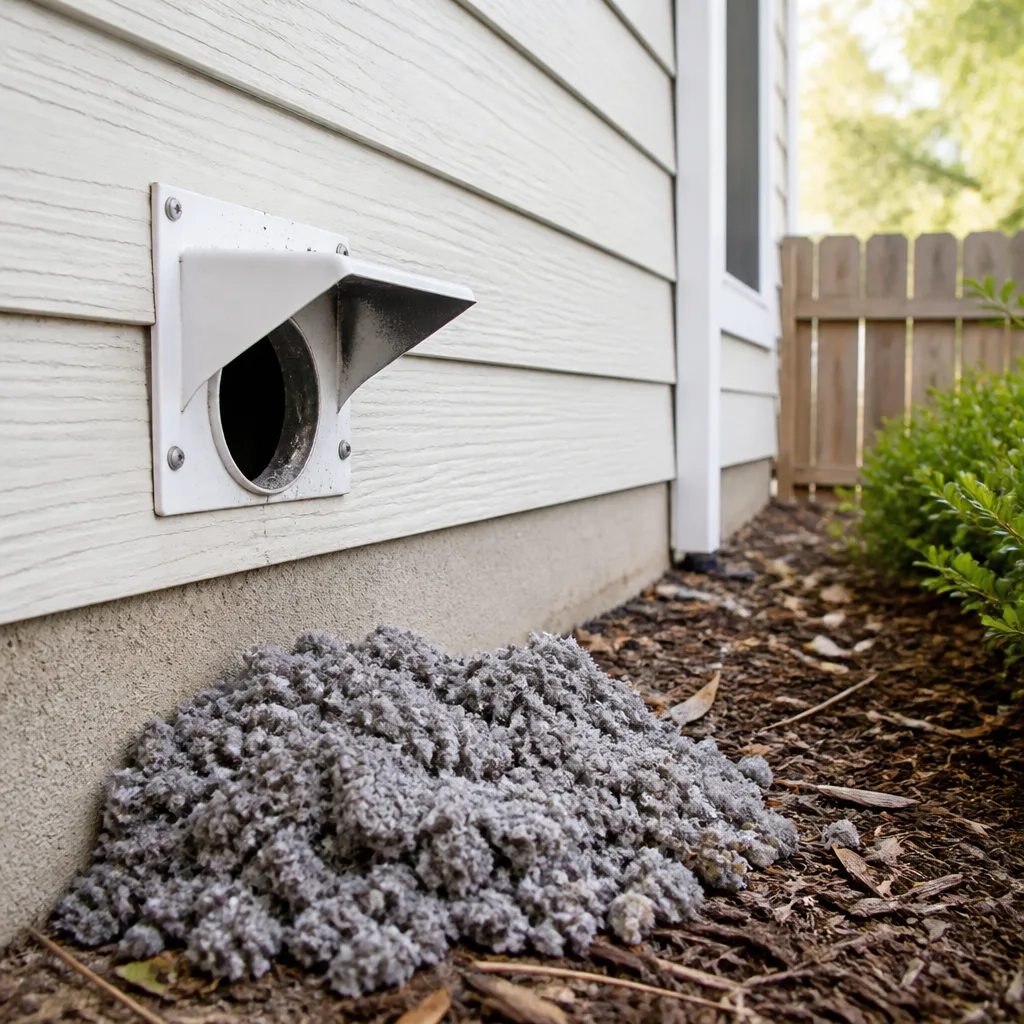
A dryer vent is a small, enclosed exhaust pipe that carries hot, moist, lint-laden air from your dryer to the outside. Lint is highly flammable, which is why building codes require dryer exhaust to be ducted in metal, never plastic or vinyl. Over two to three years of regular laundry use in a Sunnyvale household, enough lint builds up to reduce airflow significantly and raise the exhaust temperature.
Air duct cleaning does not include dryer vent cleaning. They are separate systems. If a company offers a “duct cleaning” package and does not mention that the dryer vent is a separate scope of work with separate pricing, get clarification before you sign anything. And if you have not had your dryer vent cleaned in the past three years, schedule Dryer Vent Cleaning in Sunnyvale as its own appointment. It takes about an hour and it is the single most direct fire-prevention action a homeowner can take that does not involve rebuilding anything.
What Air Duct Cleaning Costs in Sunnyvale
Air duct cleaning in Sunnyvale typically costs between $450 and $900 for a complete system on a single family home. The range depends on the number of ducts, system accessibility, and whether the job includes repair work discovered during inspection. Homes in the newer developments south of Highway 80 tend to have tighter, more standard duct configurations and land on the lower end. Older homes in neighborhoods like Cherry Orchard or Birdland often have multiple duct types, tighter crawlspaces, and accumulated decades of contamination, which pushes the job toward the higher end.
Here is a breakdown by scope:
- Basic cleaning, single system: $450 to $650. Includes inspection, cleaning of all supply and return runs, register cleaning, and before-and-after documentation.
- Full cleaning with dryer vent: $550 to $850. Everything in the basic package plus a separate dryer vent cleaning.
- Cleaning plus minor repair: $700 to $1,200. Includes duct sealing at accessible joints, reconnection of separated sections, or replacement of a short flex duct run identified during inspection.
- Cleaning plus major repair or partial replacement: $1,500 and up. Involves replacing collapsed flex ducts, sealing large portions of the system with mastic, or reworking failed connections in the crawlspace or attic.
The industry in Sunnyvale has a reputation problem with bait-and-switch pricing: a low teaser quote that becomes a much larger invoice once the van is in the driveway. Watch for per-vent pricing schemes. A company that quotes “$29 per vent” on a house with 25 vents is charging $725 for what should be a $500 job. A reputable company gives you one flat price per system before work begins, in writing. Ask for that.
Common Mistakes to Avoid
- Trusting the 3 to 5 year generic interval. That number was built for climates without wildfire smoke and without year-round HVAC demand. Sunnyvale homes need attention more often, especially after heavy fire seasons like 2020 and 2024.
- Accepting a quote without an inspection. No honest professional can price a duct cleaning without seeing the system. A phone quote for a fixed price that does not include at least a visual inspection of the main trunk line is a guess, and usually a low one designed to get a technician in the door.
- Skipping pre-cleaning video inspection. Without a camera run through the ducts before work starts, collapsed flex ducts and disconnected joints go unnoticed until the cleaning is finished and the problem persists.
- Hiring a general handyman for duct work. Duct cleaning is a narrow trade. A generalist with a shop vac attachment lacks the negative-air equipment, HEPA filtration, and training to do anything beyond surface dust removal.
- Treating the dryer vent as optional. It is a separate system with separate safety implications. Skipping it because “the ducts are clean” leaves a lint-filled fire hazard in the wall.
- Paying for cleaning without getting documentation. If you do not receive before-and-after video or photos and a particle count or airflow verification, you have no proof the work was done.
- Postponing repair because you already paid for cleaning. Cleaning a damaged duct system is wasted money. The air quality does not improve if the system is pulling attic dust through an open joint.
When to Call a Professional
Call a professional if you notice dust streaking from vents even after you clean the registers, if one or more rooms never reach the temperature set on the thermostat, if you smell stale or musty air when the system starts, or if you cannot remember when your ducts were last serviced and your home has been through two or more wildfire seasons. Also call if you have not had a dryer vent cleaning in more than three years, because that is a fire safety decision, not a convenience one. The work should always start with inspection, and the inspection should always be documented.
Duct Cleaning Sunnyvale offers Duct Cleaning Sunnyvale home-based service with full before-and-after documentation on every job. For a free estimate, call (866) 593-7291.
Frequently Asked Questions
Air duct cleaning in Sunnyvale typically costs between $450 and $900 for a complete single-family home system. The final price depends on the number of duct runs, system accessibility, and whether repair work is discovered during inspection. Call (866) 593-7291 for a free estimate based on a full system evaluation.
Every 2 to 3 years for most Sunnyvale homes. Wildfire smoke exposure, high HVAC runtime, and coastal humidity all accelerate particulate accumulation beyond what the standard 3 to 5 year guideline assumes.
Cheaper quotes usually exclude inspection, use consumer-grade equipment without negative-air extraction, or quote a low per-vent price that balloons once the job is scoped. Ask for a flat system price in writing and confirmation that the job includes HEPA-filtered negative-air equipment and before-and-after documentation. Call (866) 593-7291 for a zero-ambiguity quote.
You should receive before-and-after video or photo documentation of the main trunk lines and branch runs, along with a particle count comparison or airflow verification at the registers. If the company cannot provide this, the job was not verified, regardless of the price.
Duct cleaning removes the particulate residue that holds smoke odor inside the duct system, but it may not eliminate the smell entirely if particles have settled into carpet, upholstery, or wall surfaces. In homes with heavy wildfire exposure, we often recommend Air Duct Cleaning in Sunnyvale combined with an evaluation of the HVAC filtration. An Aprilaire media filter with a high MERV rating catches the fine PM2.5 particles that pass through standard one-inch filters, and that is the system-level fix that prevents recolonization.
Yes, when the inspection finds collapsed flex ducts, disconnected joints, or open gaps that would reintroduce contamination immediately after cleaning. Cleaning alone cannot fix structural failures. Air Duct Repair in Sunnyvale must happen first for the cleaning investment to hold.
The Bottom Line
Sunnyvale homes face a set of duct contamination conditions that generic guides ignore: wildfire smoke particulate, coastal humidity, and dense housing stock with aging flex duct systems. The right response is not a coupon cleaning every five years. It is a 2 to 3 year cleaning interval, documented with before-and-after video and measurable air quality verification, performed with negative-air HEPA equipment so contamination leaves the house rather than resettling in it. And when inspection finds damage, the repair comes before the cleaning, because one does not work without the other. Your HVAC system is not a background appliance. It is the thing that determines what you breathe indoors for 20 hours a day.
Written by the team at Duct Cleaning Sunnyvale, serving Sunnyvale since 2015.
See the difference
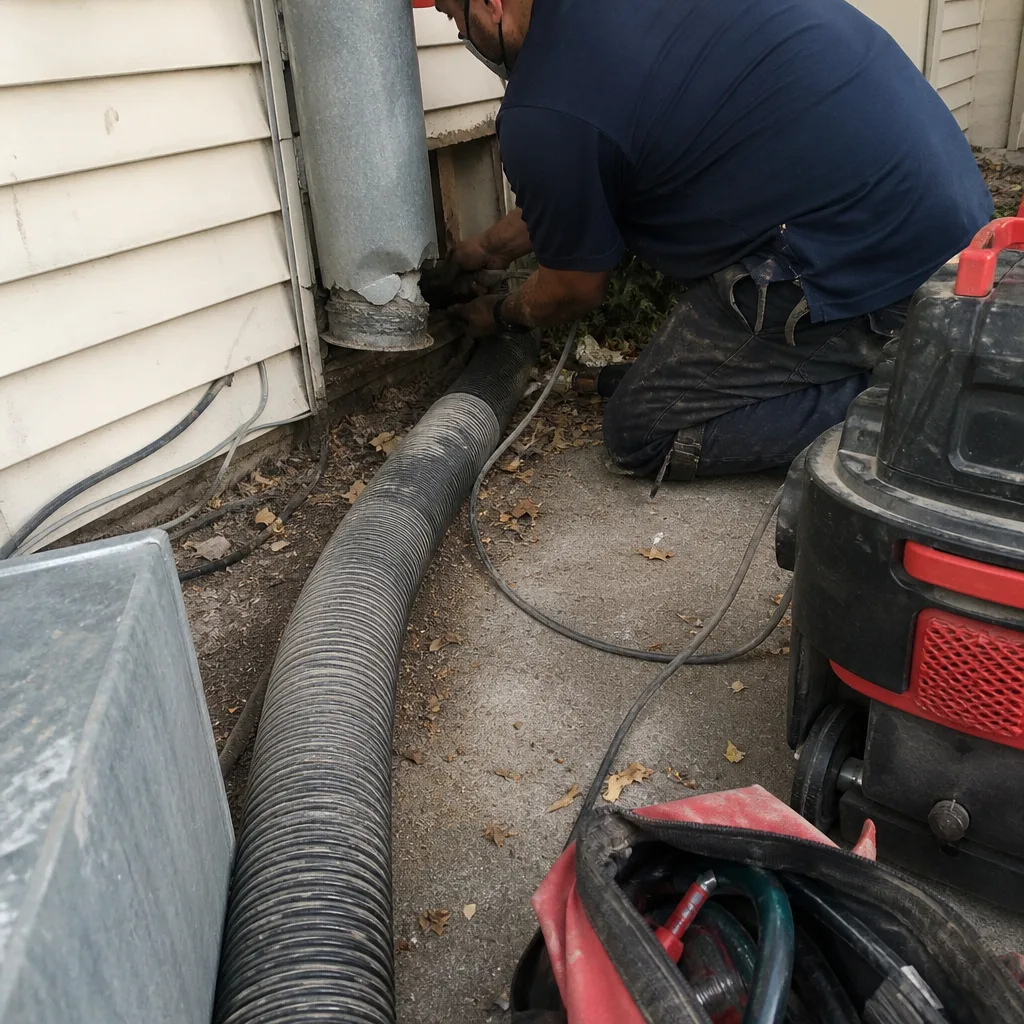 Before
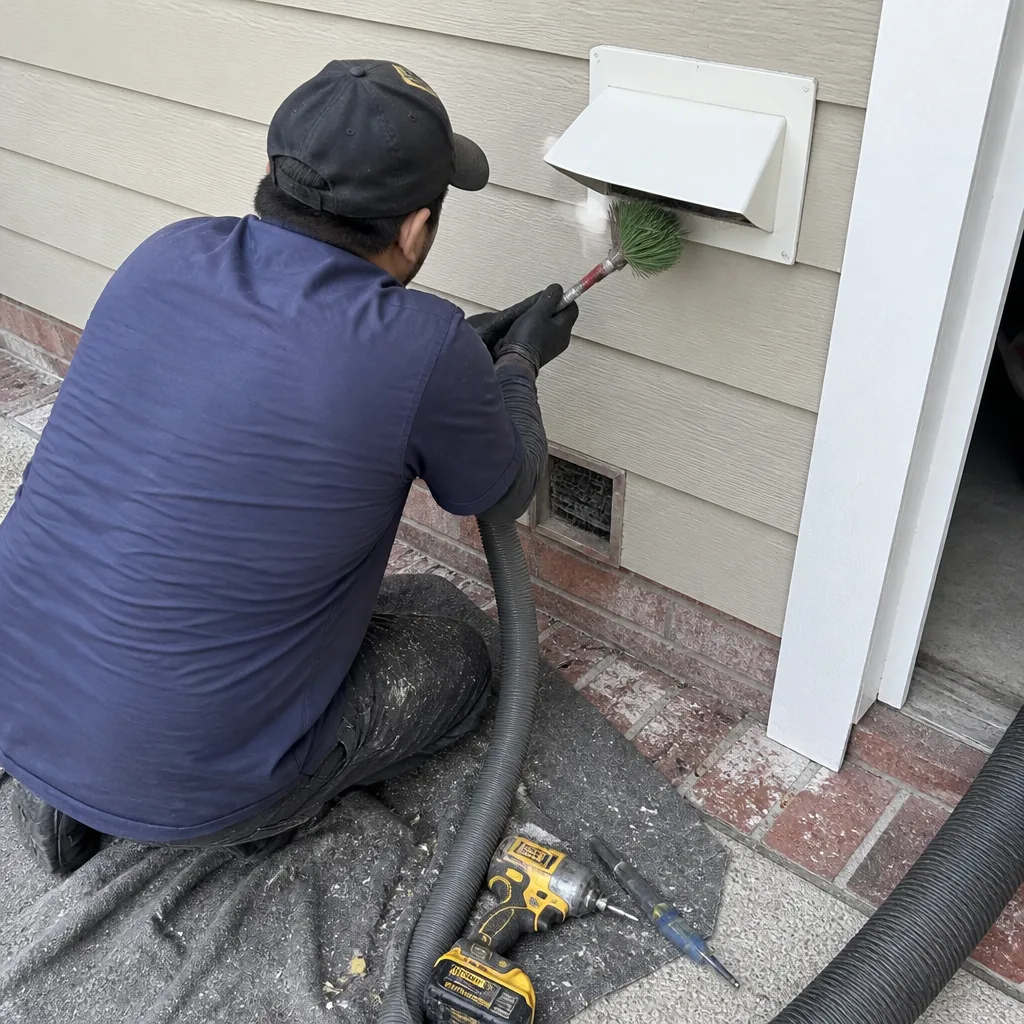 After
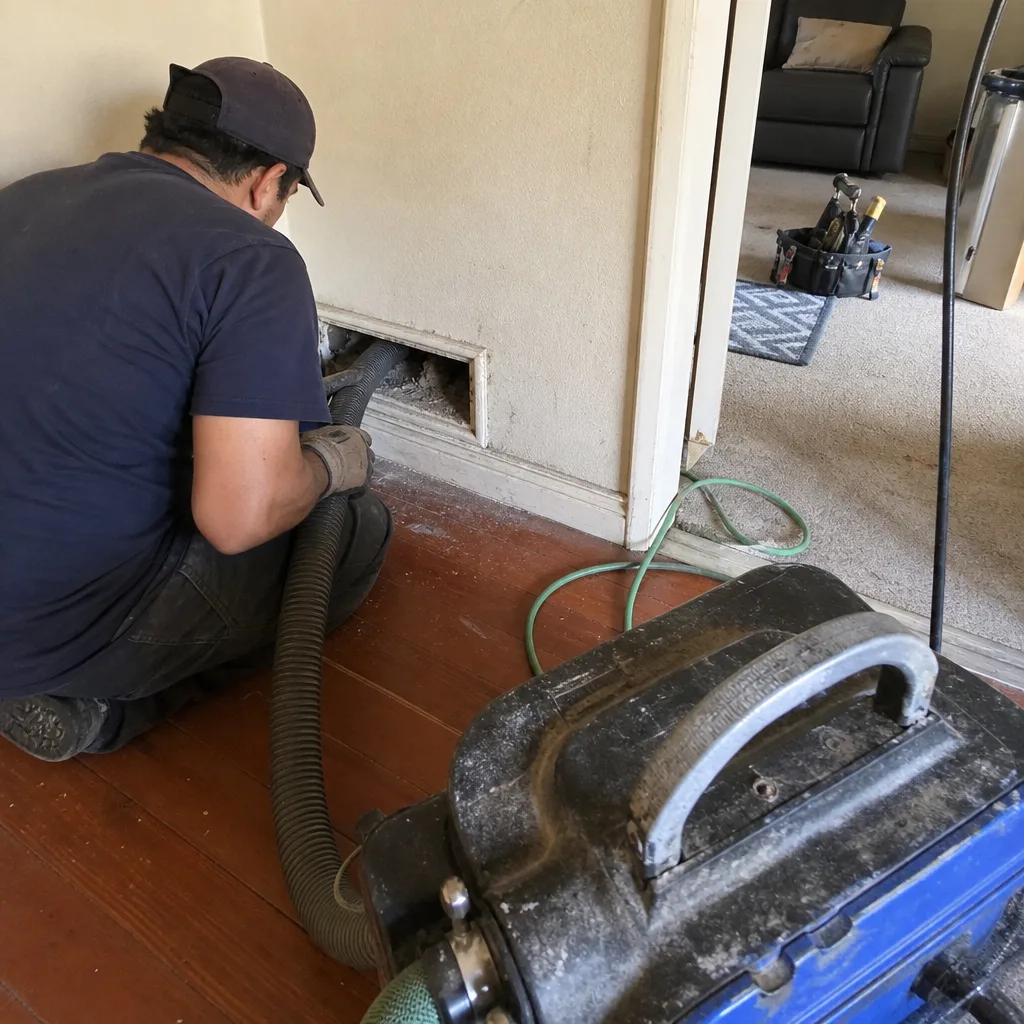 Before
 After
 Before
 After